A Small Blue-and-White Warming Vessel: Late Kangxi?
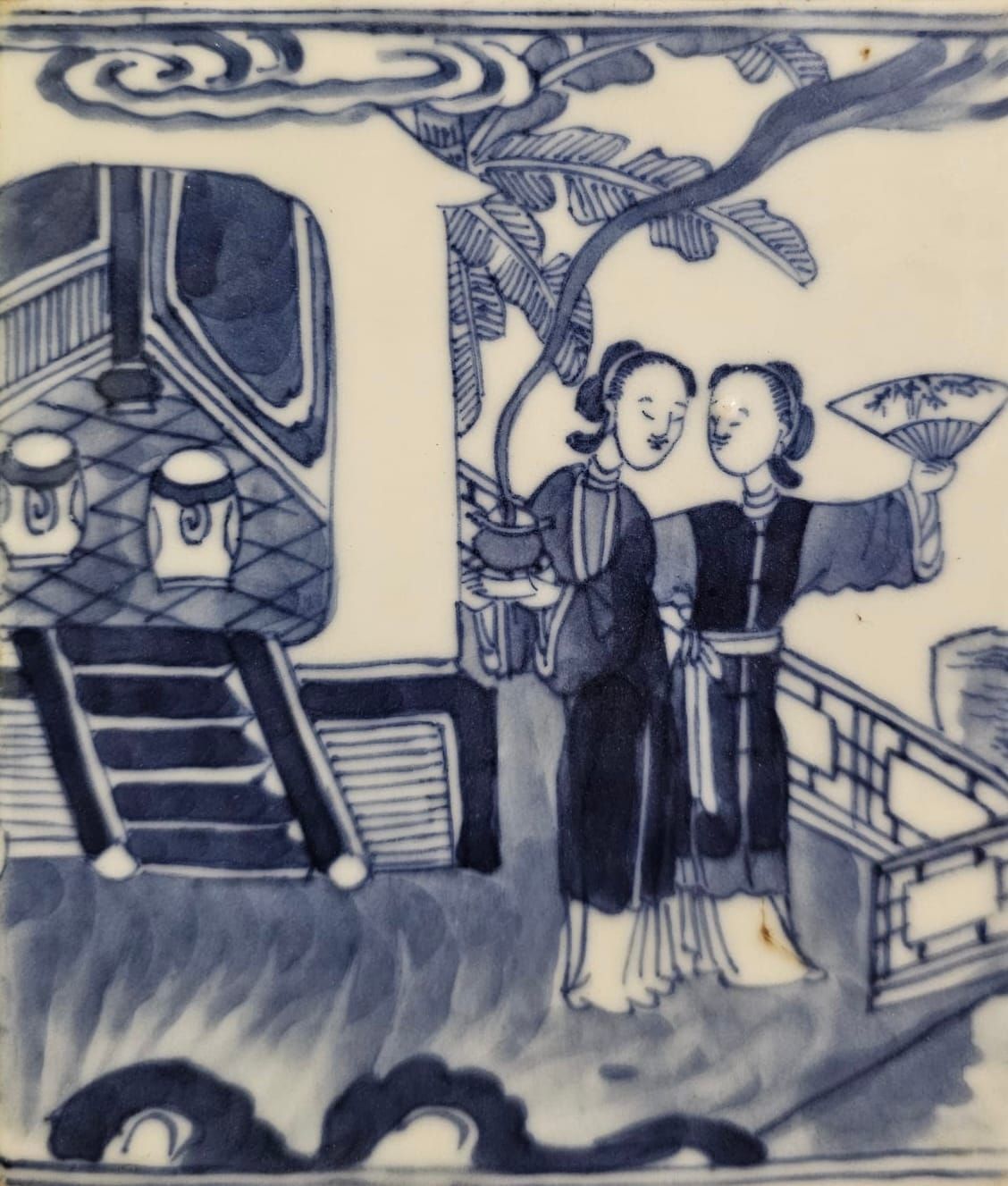
One of the pleasures of collecting is encountering an object that refuses easy classification.
This small square warming vessel measures approximately 11.5 cm high by 10 cm wide on each side. The body is highly translucent, transmitting a warm honey-orange light at thinner points. The glaze is distinctly waxy to the touch and displays subtle undulations under raking light. Under magnification, the cobalt sits comfortably within the glaze, showing natural concentration, edge softening and visible brush attack and release.
What first attracted my attention was not the form, but the decoration.
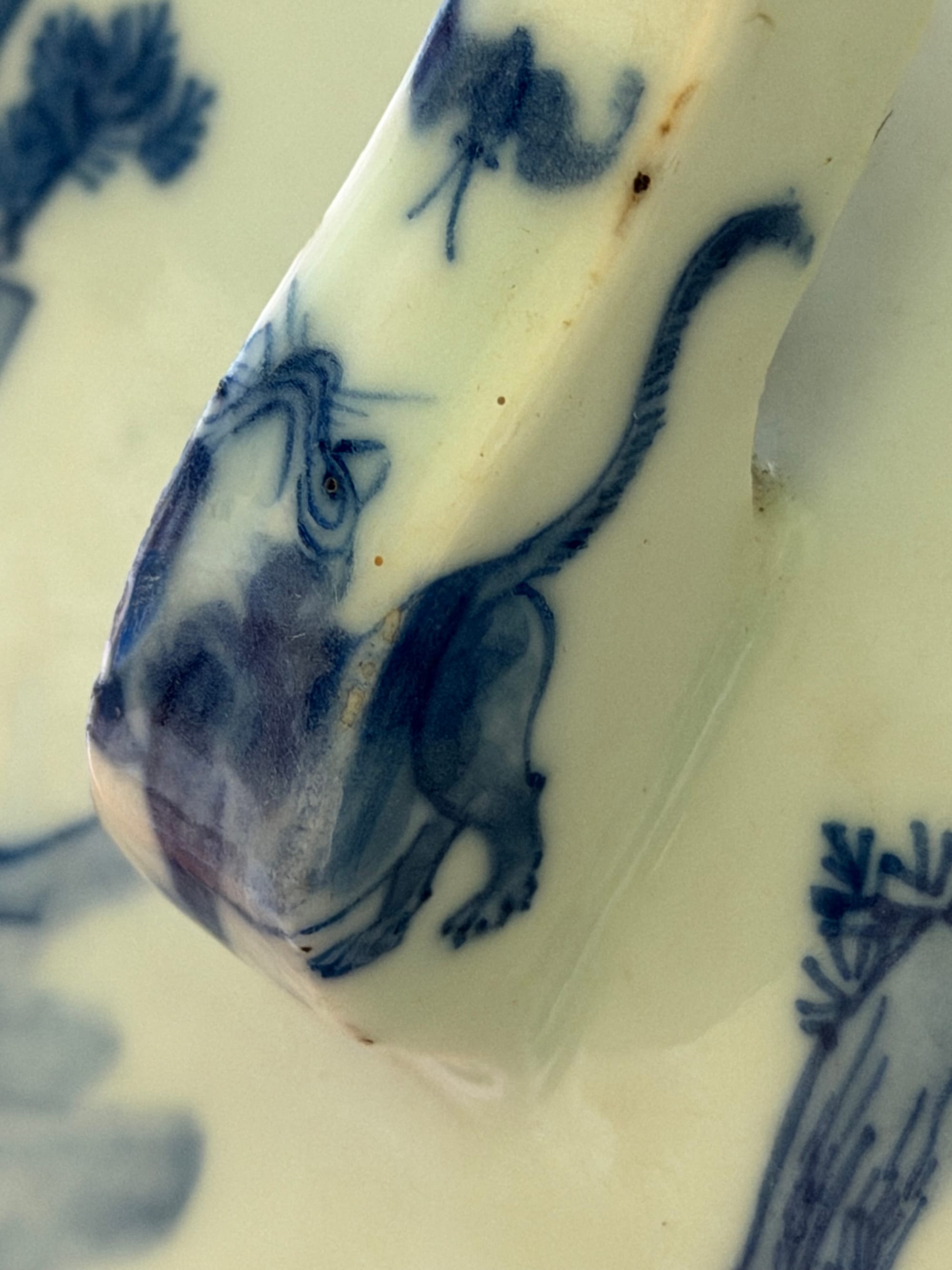
The painting is not organised as four separate panels. Instead, the narrative wraps around the vessel. The chamfered corners become part of the composition. The pebble wall continues around the angle, the cloud bands flow across faces, and the landscape washes move uninterrupted through the changing geometry.
On one side, two lovers stand within a garden setting. A third figure watches from a moon-window. Around the adjacent face, a banana tree rises from a landscape of scholar rocks and cultivated space. Elsewhere, a curious animal is integrated into the spout itself. The decorative programme feels more like a continuous pictorial environment than a collection of decorative reserves.
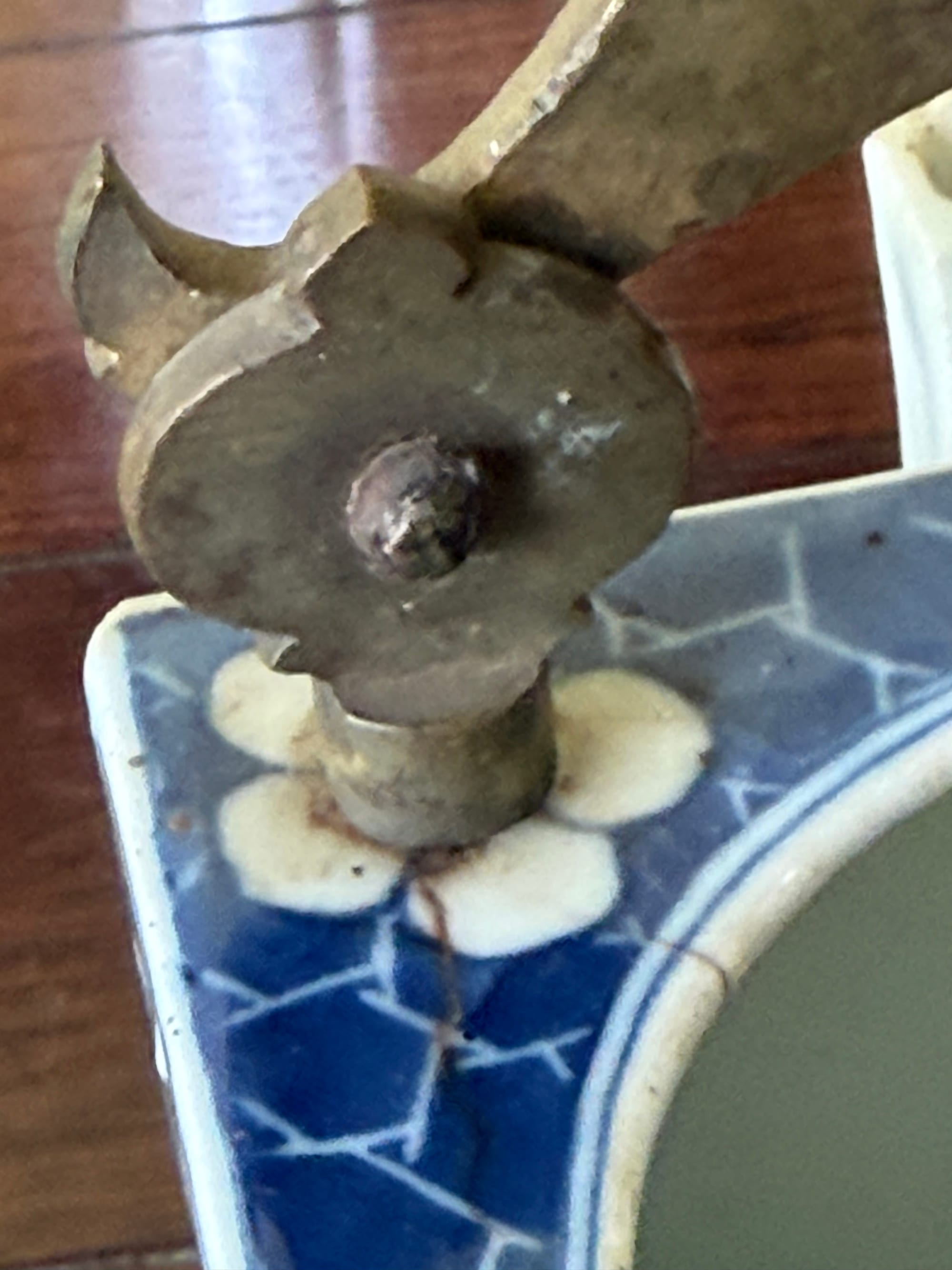
The metal mounting system appears substantially original in conception. Heavy gilt-brass fittings, now deeply oxidised, retain evidence of historic repairs and replacement fastening elements accumulated during a prolonged period of use. The repairs preserve rather than replace the original engineering, suggesting a vessel that remained valued and functional over many years.
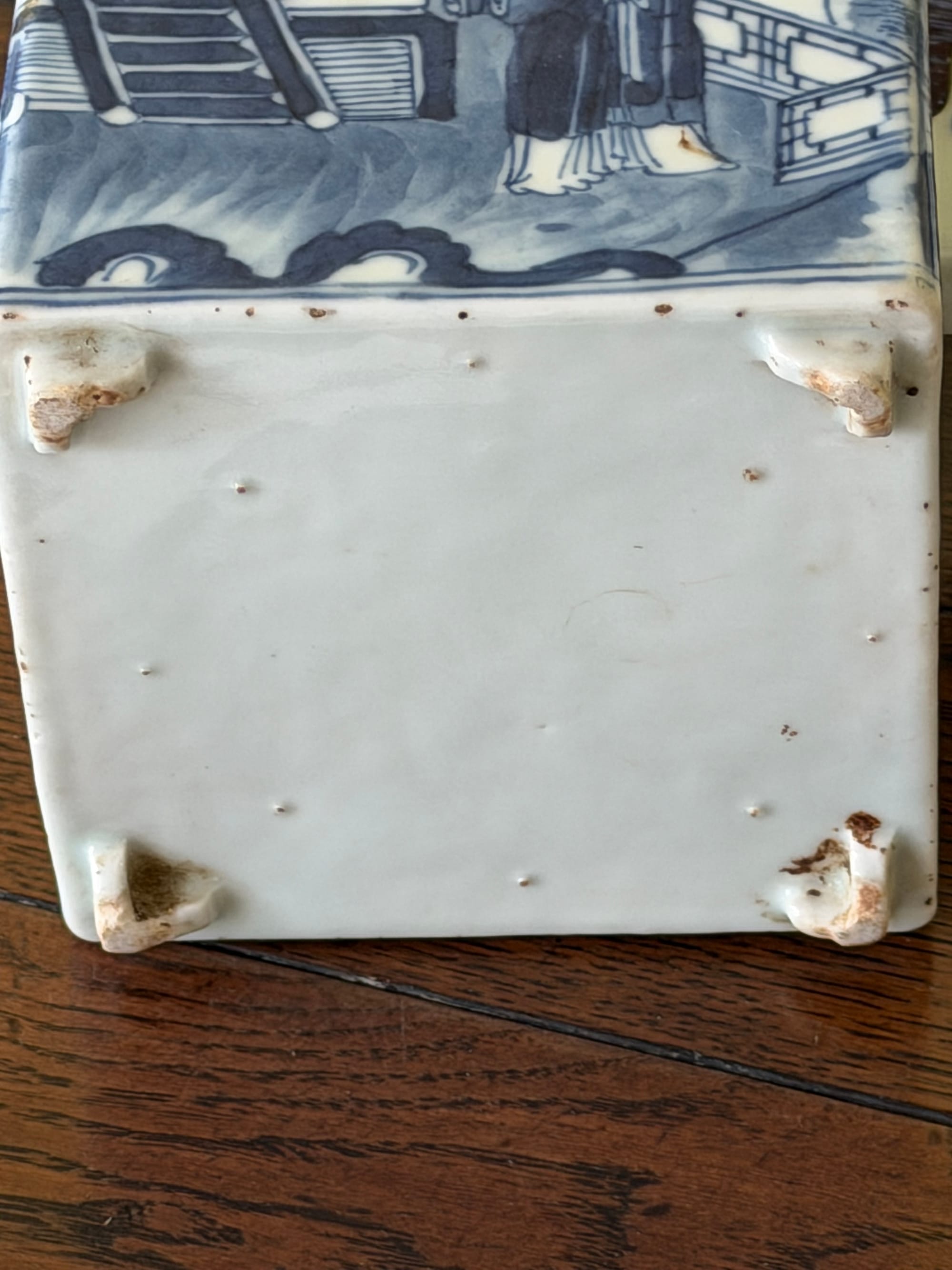
At present, my working hypothesis is late Kangxi with strong Transitional pictorial inheritance, although further research is required. The object's combination of narrative sophistication, integrated design, hand-resolved construction and long use-history places it outside the ordinary categories of later decorative blue-and-white.
As always, this remains an exercise in observation rather than certainty.
Stephen Ford – independent. We analyse and observe. Nothing more.