Son Village Chapter 3.

The Farmers.
By now, as I wandered around, the reason for the lack of people in Son Village became obvious.
Almost everyone was working, many in the fields.
Some worked alone, others in pairs or small family groups. From a distance the farmers were often difficult to spot, many hidden by the raised earthen banks separating one paddy from another. Only when close did one observe the scale of the task.
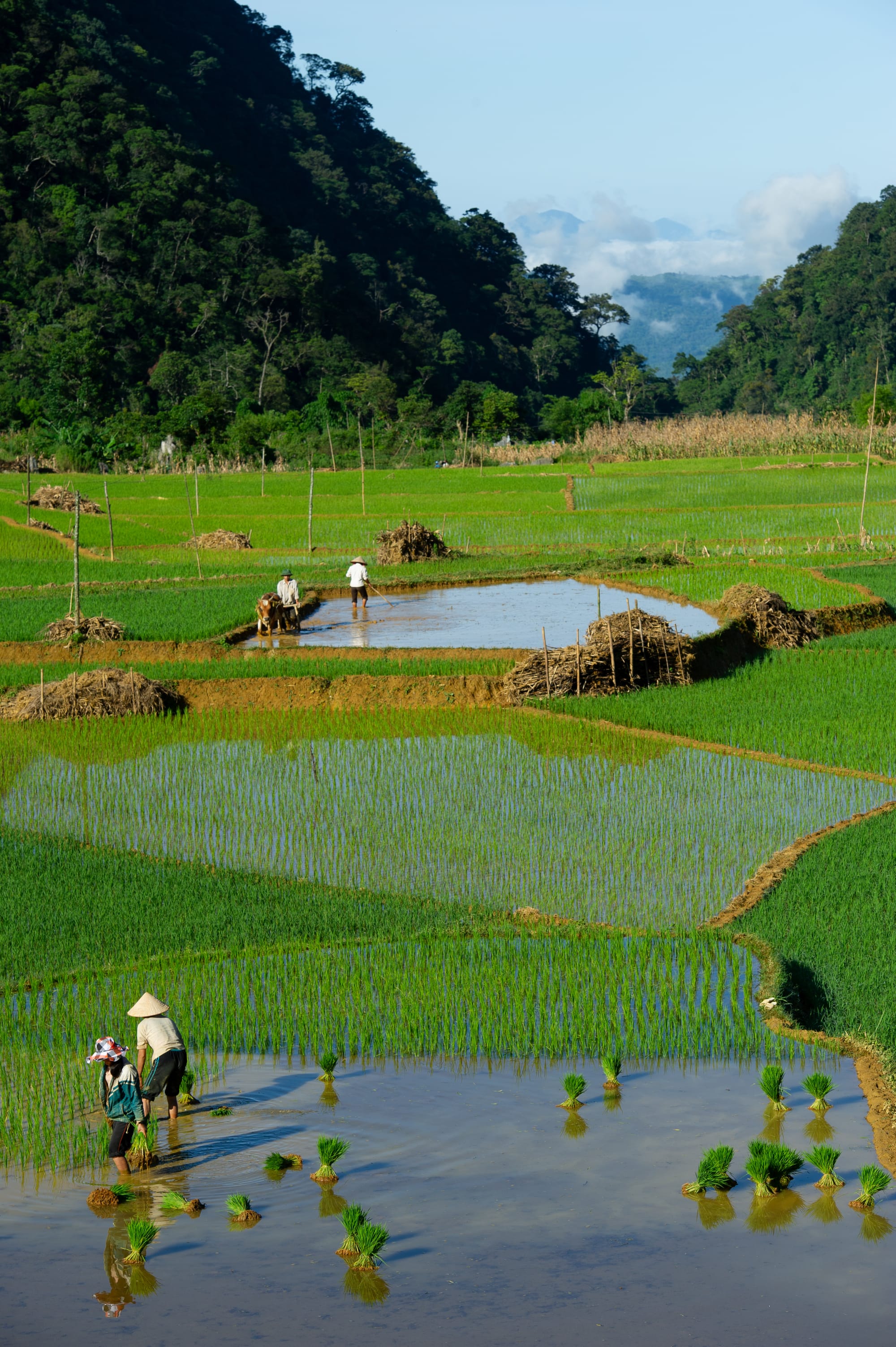
This was the second rice planting of the year.
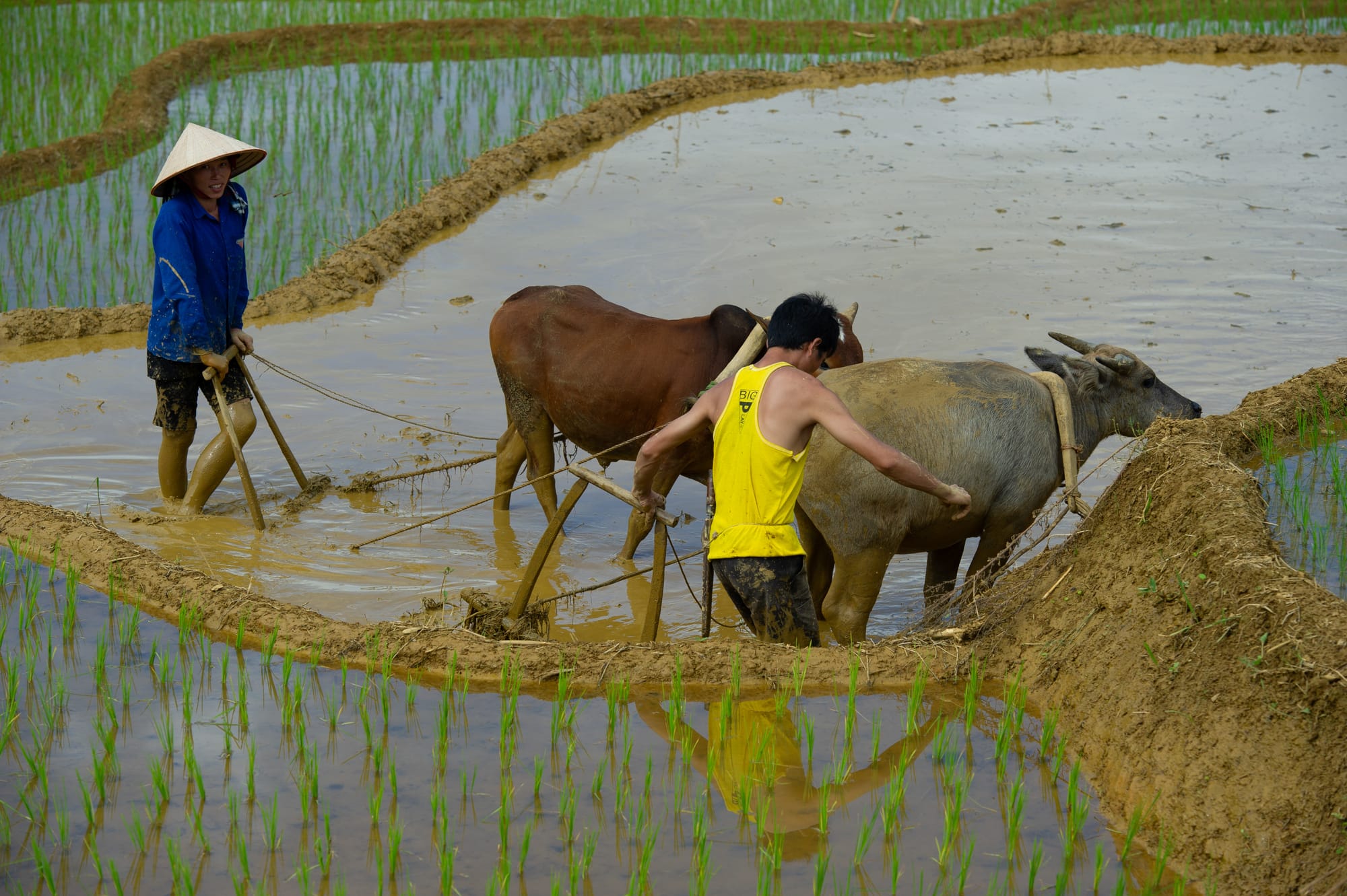
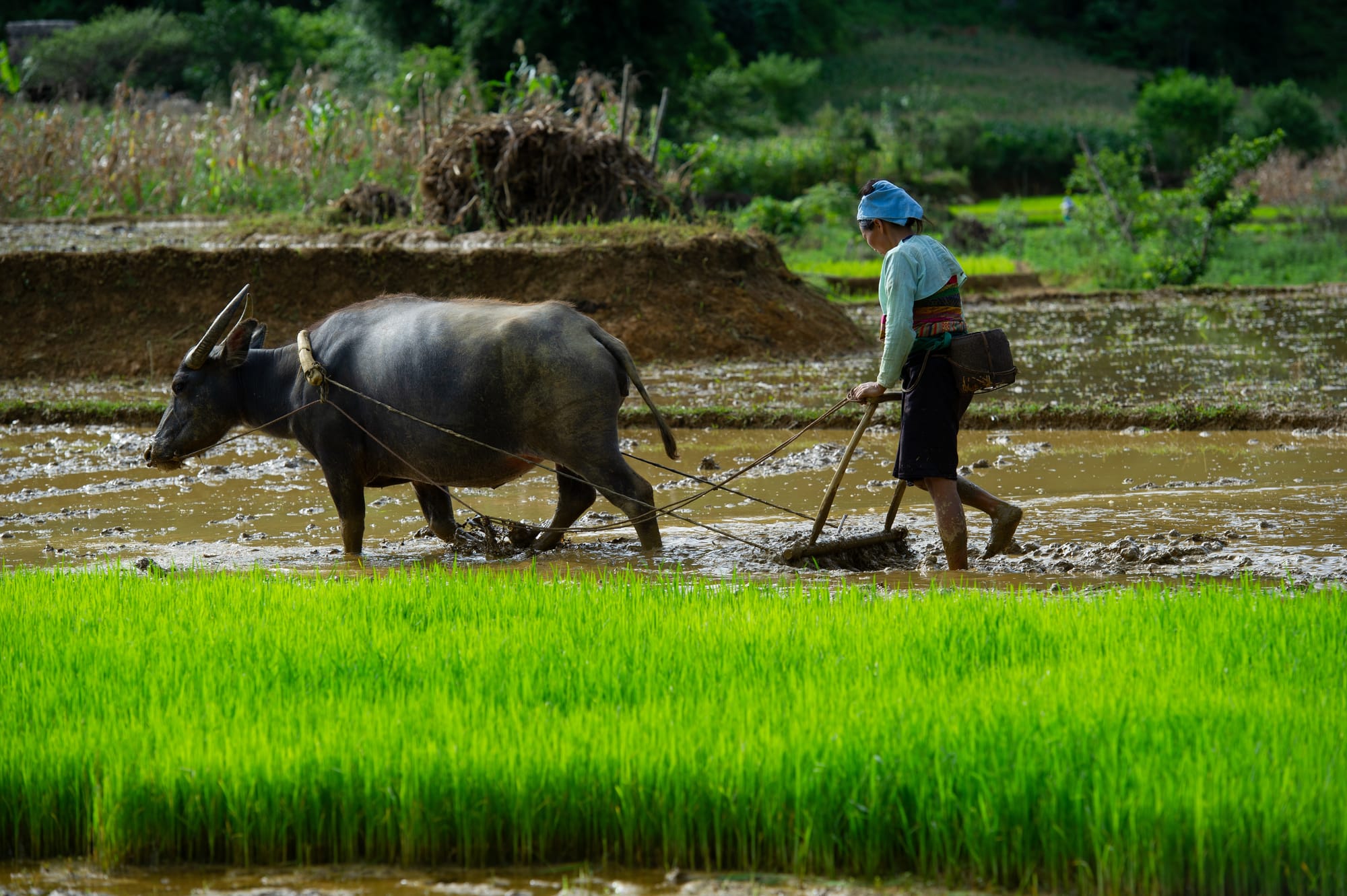
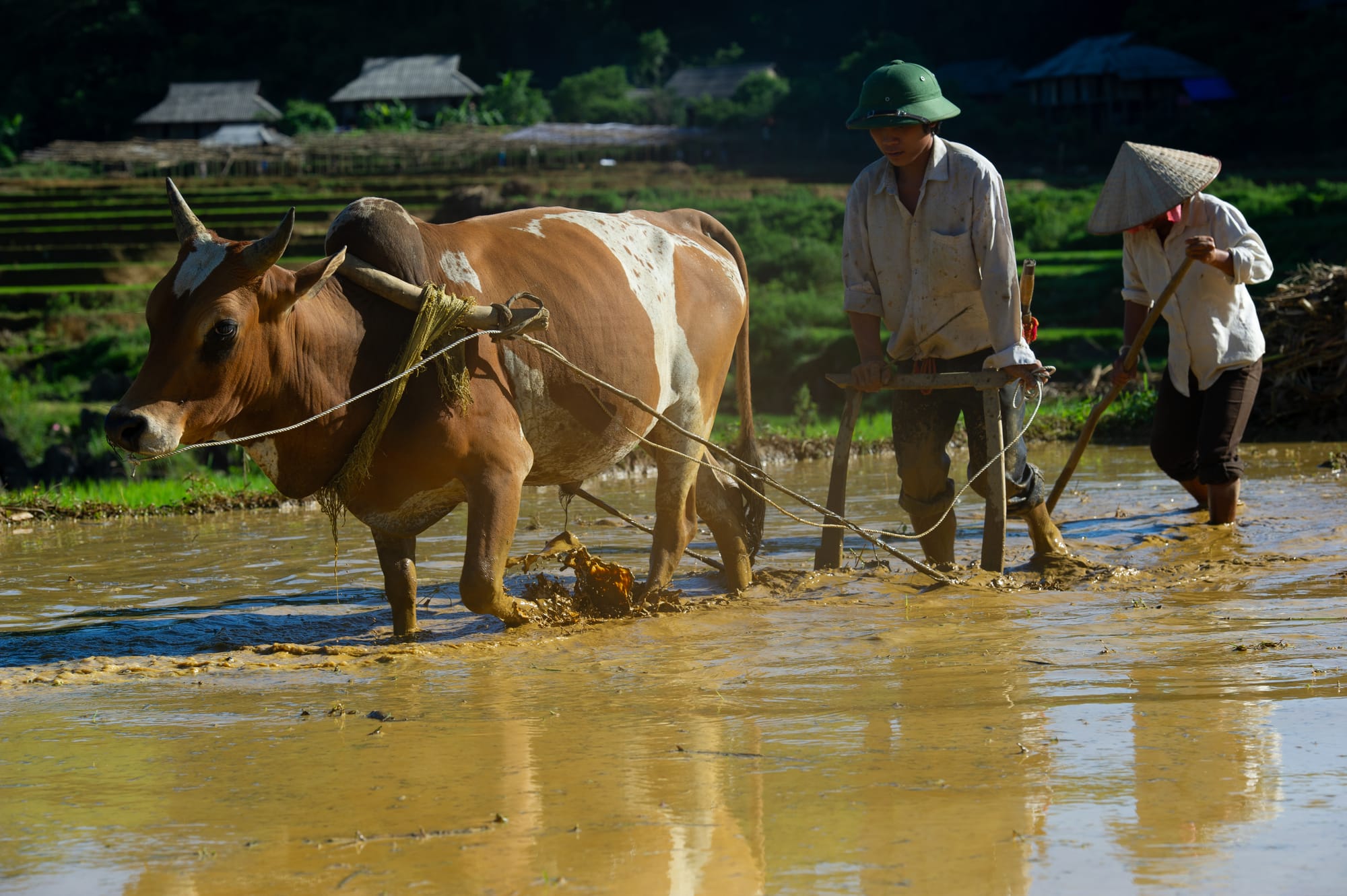
The fields had first to be prepared. Water buffalo were led into the flooded paddies, pulling vintage wooden ploughs through the rocky ground. Farmer and animal moved slowly together, turning and breaking the earth.
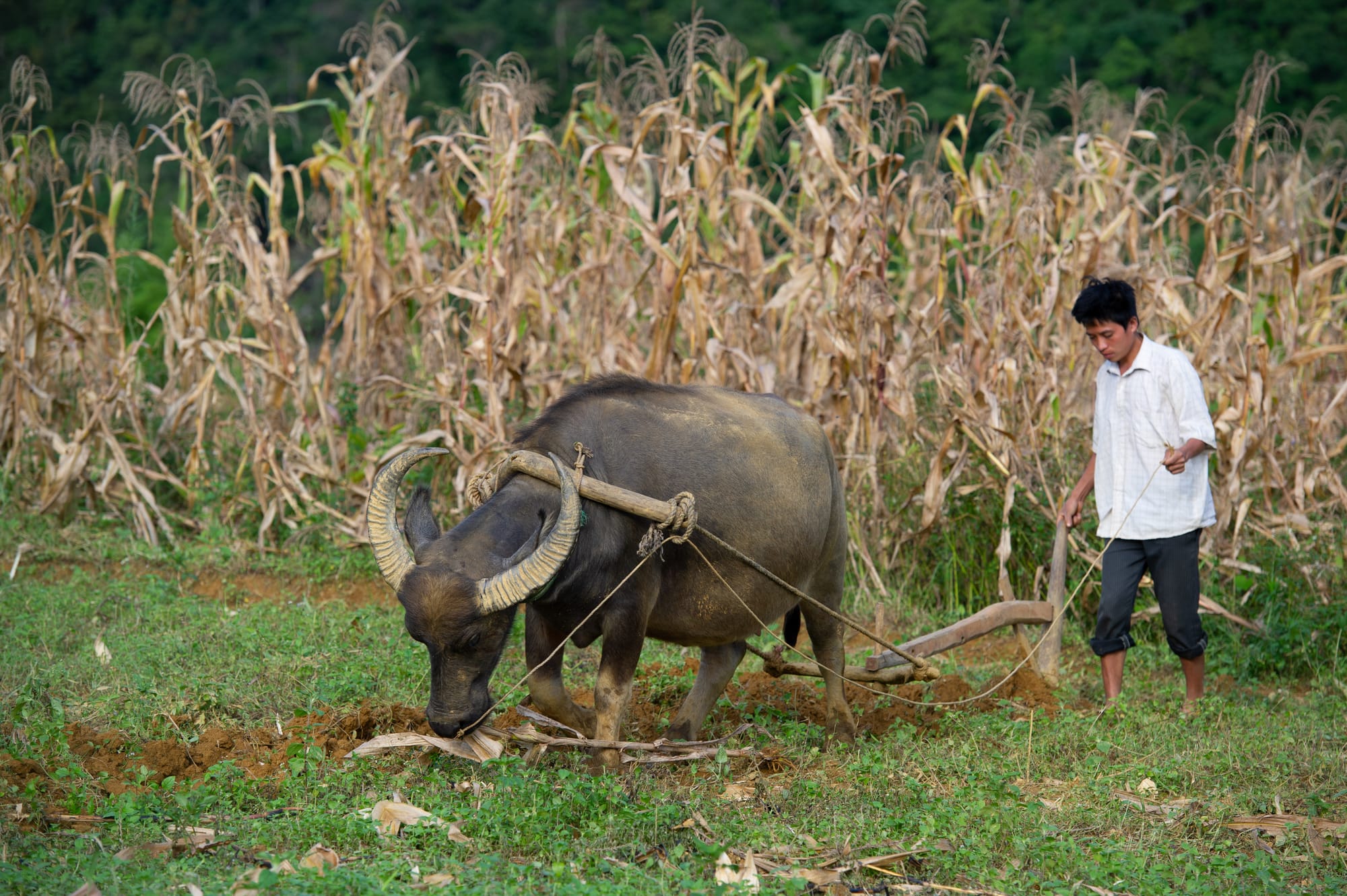
At one in the fields. The farmers and the buffalo.
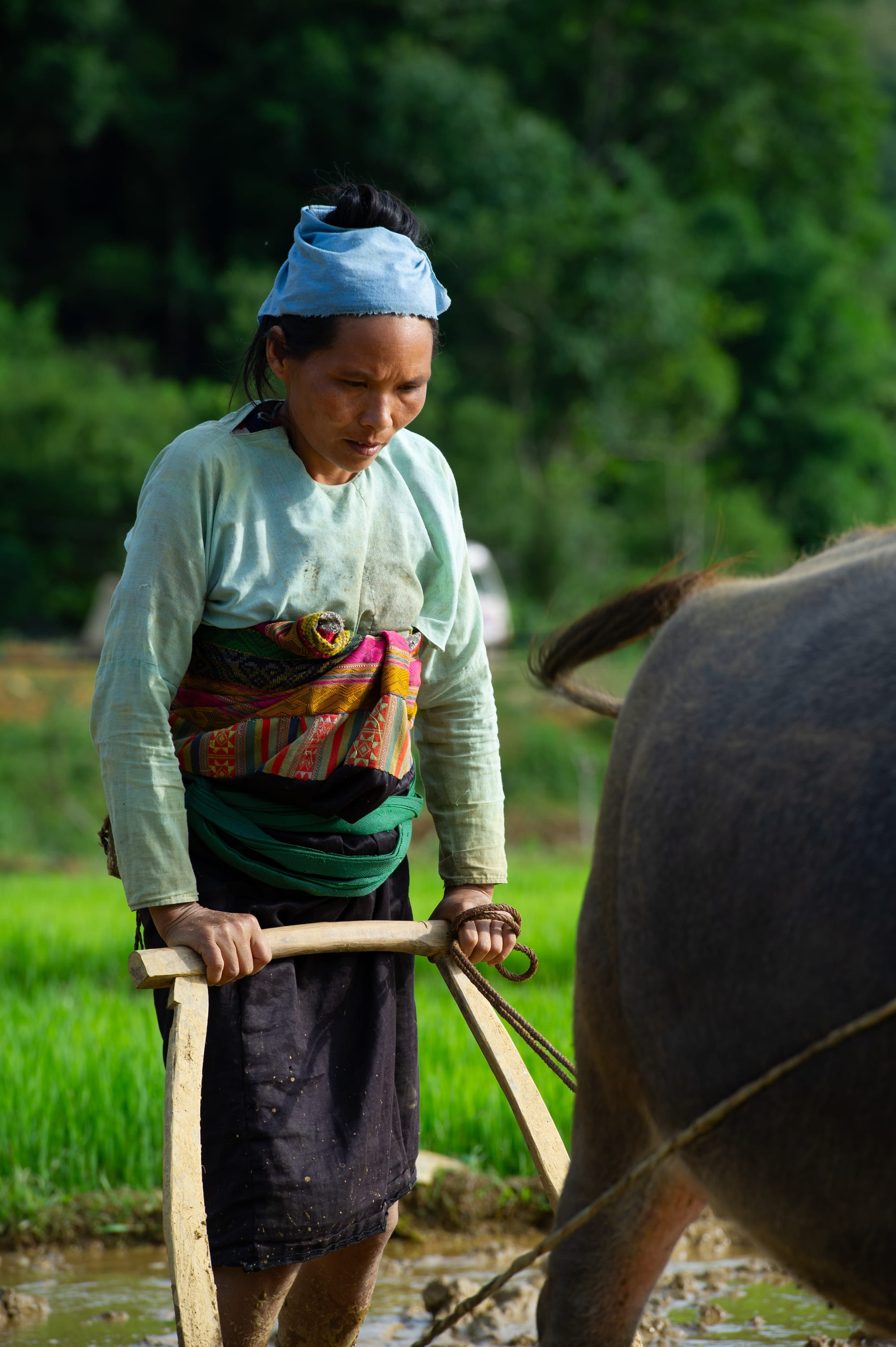
At the end of each short run the animal was turned, the wooden implement repositioned, and the process began again.
The seedlings, vivid greens.
Looking around the valley, the colour abruptly changed.
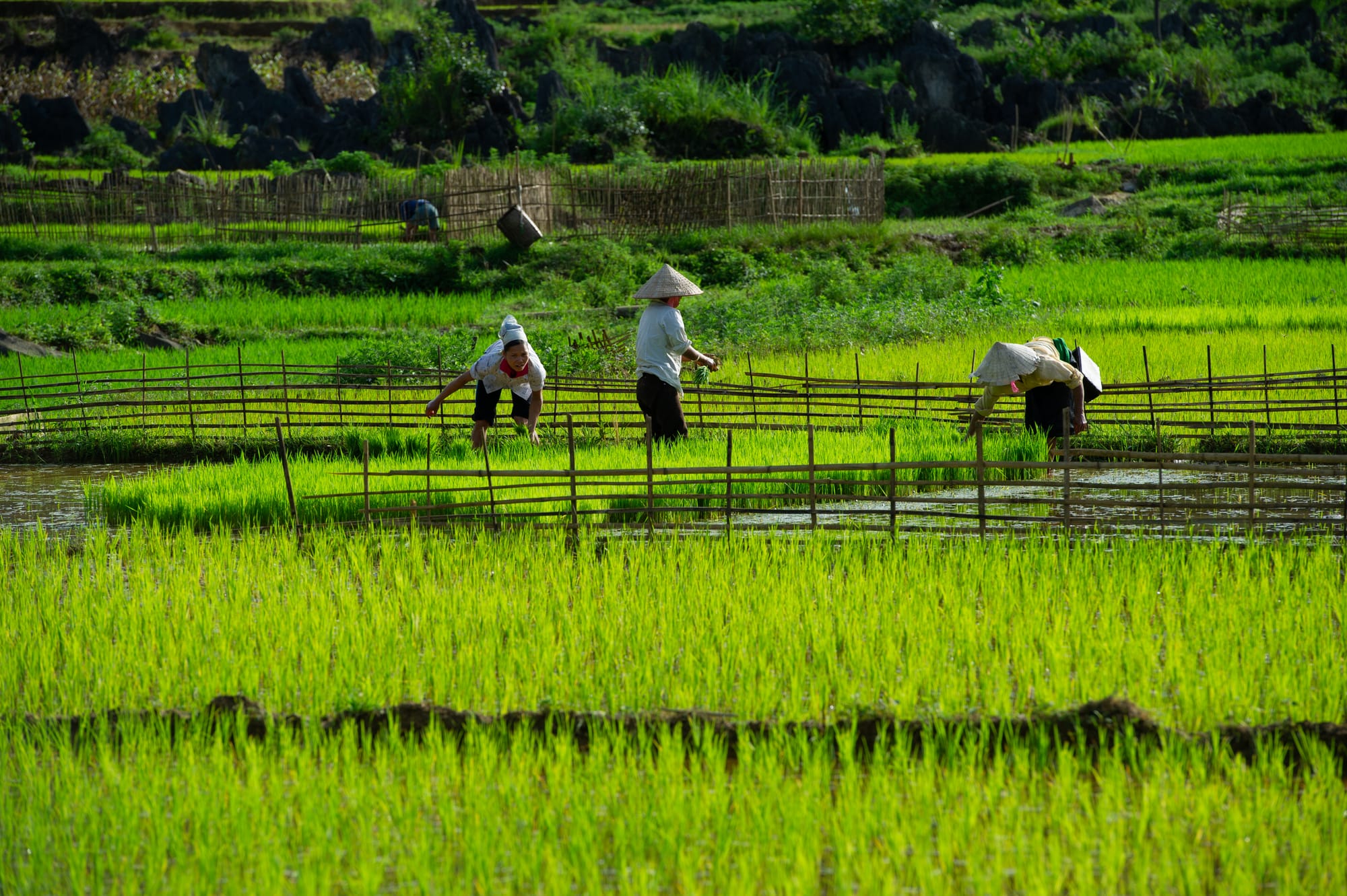
Against the darker greens and browns of the flooded landscape were patches of almost impossibly bright green. These were the rice seedings newly planted into the paddies.
Planting.
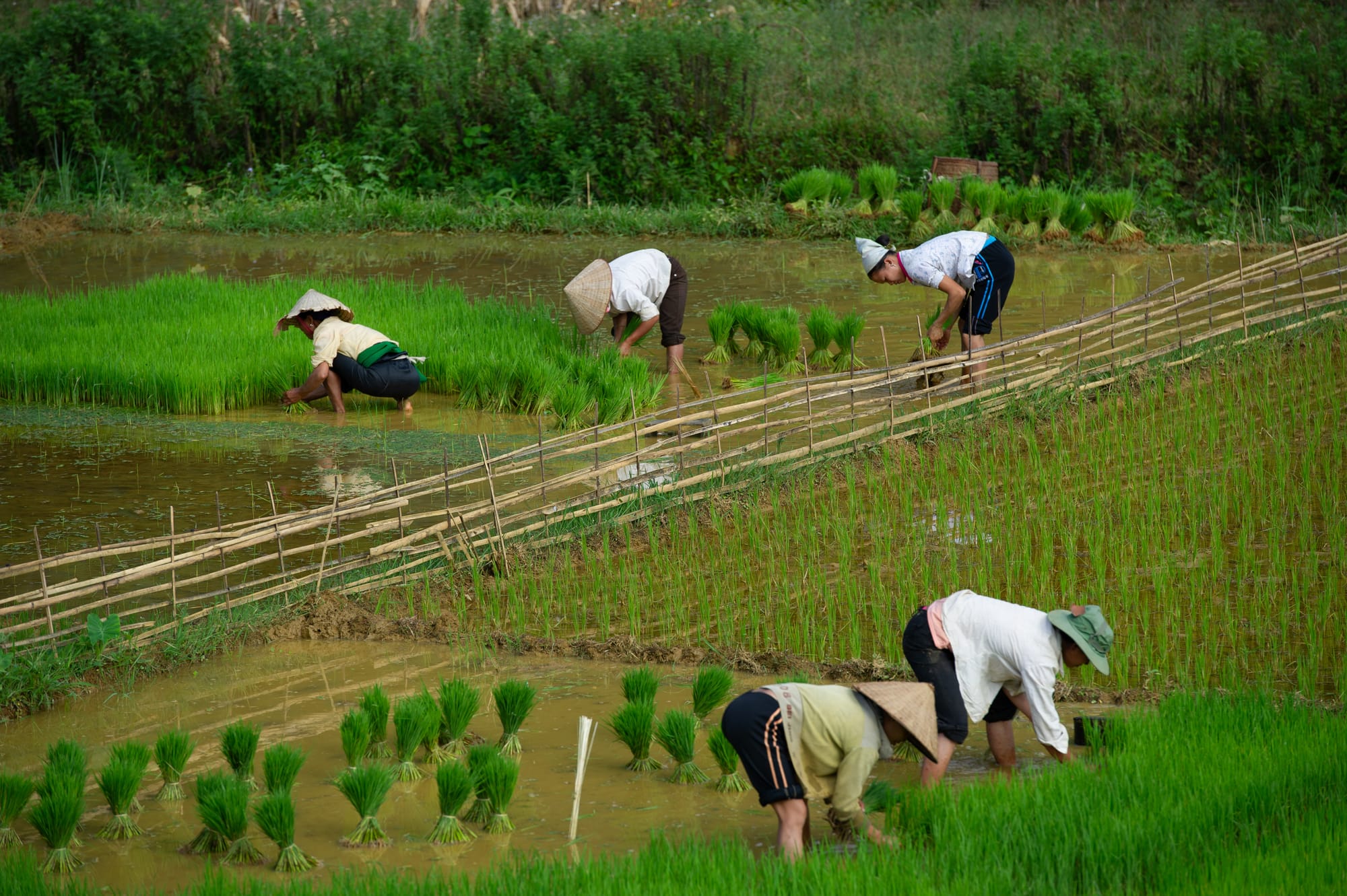
The seedlings were planted by hand.
People gathered seedlings into bundles, transported them to the field where they were then ready for transplanting. Repetitive work, carried out close to the ground and often ankle-deep in water and mud.
Transplanting appeared deceptively simple.
A small bundle of seedlings was held in one hand while the other repeatedly separated a few plants and pushed their roots into the soft mud beneath the water.
Repeat.
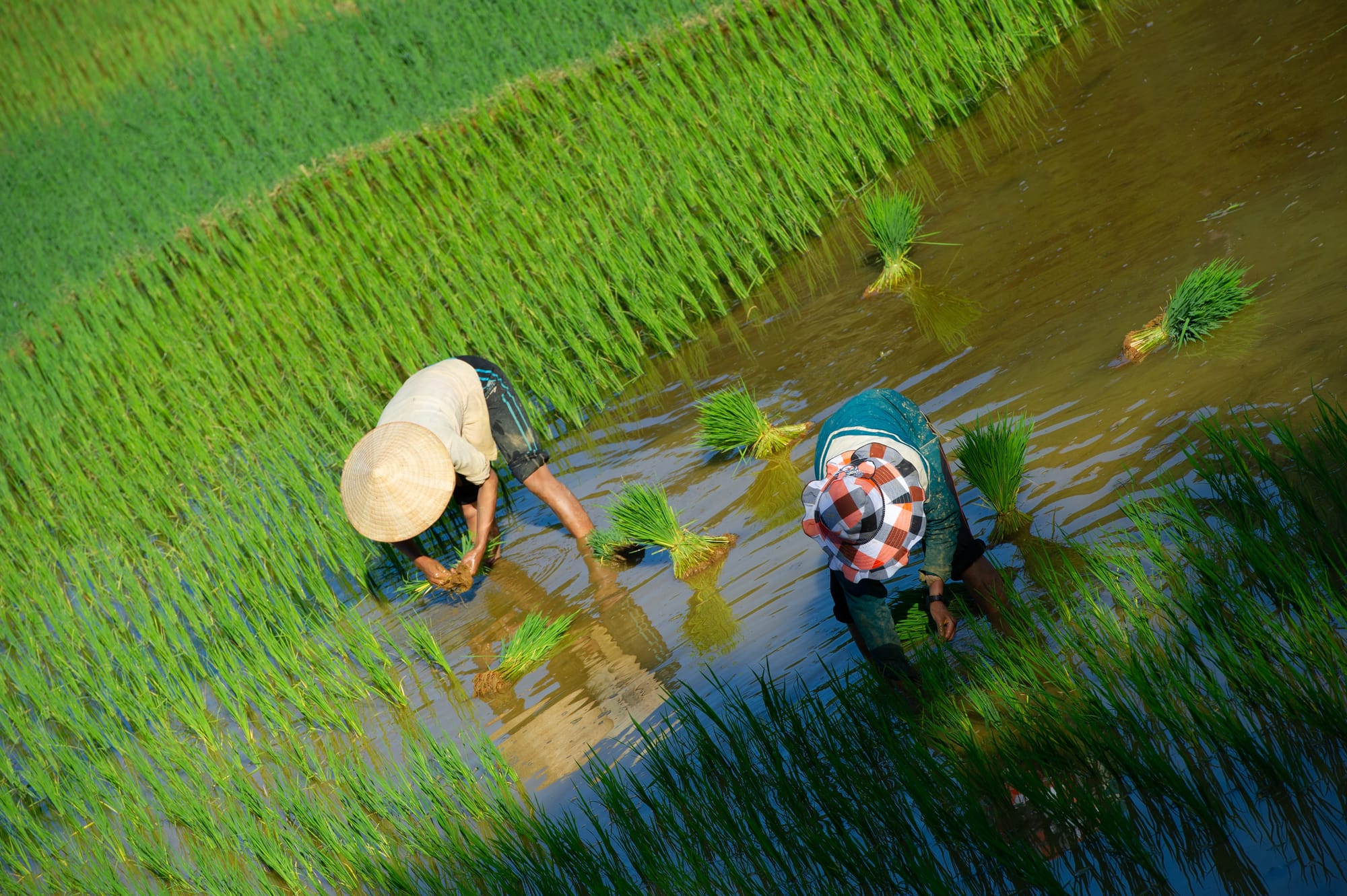
Gradually the empty brown surface of the paddy became a grid of green shoots.
Watching from the edge of a field, the rhythm was striking. There was little wasted movement. These farmers had performed the same task from childhood, year in, year out. They worked efficiently and made something physically demanding appear almost effortless.
Hours spent bent forward, knee deep in muddy leech ridden waters.
The heat and humidity remained even when the sun disappeared - early - behind the hillside.
Families as Working Units.
What I remember most clearly is that farming did not appear to belong to any particular group.
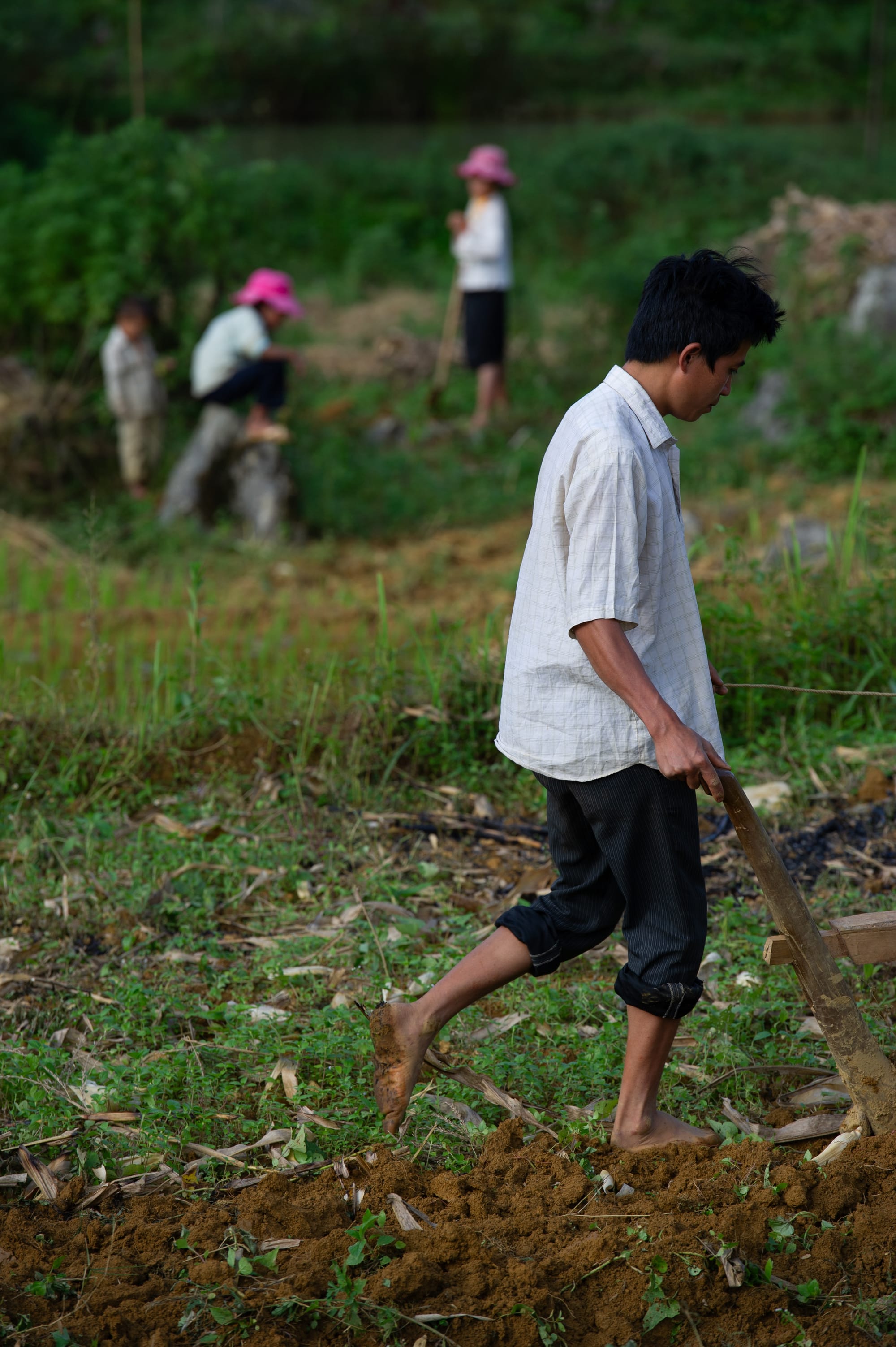
Men worked.
Women worked.
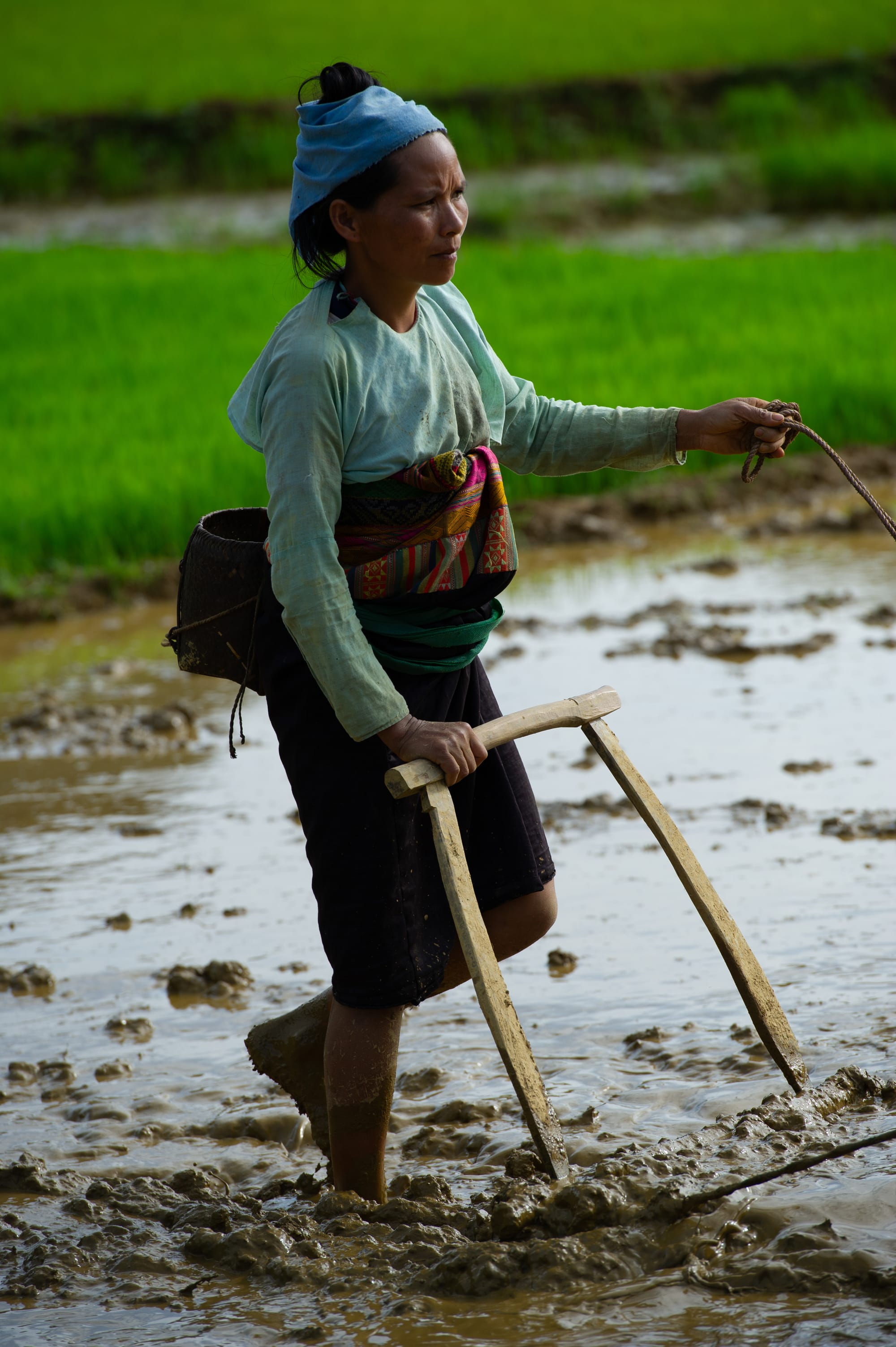
Older people worked.
Young people helped or watched.
Across the valley, families were distributed according to whatever needed to be done before the end of that working day.
Ploughing or planting.
As a line of people worked slowly across a paddy transplanting rice, someone would disappear along one of the narrow banks carrying another bundle of seedlings and reappear minutes later in a different field.
There was muted conversation, "what was for supper" maybe, or perhaps more likely, "why is he watching us"?
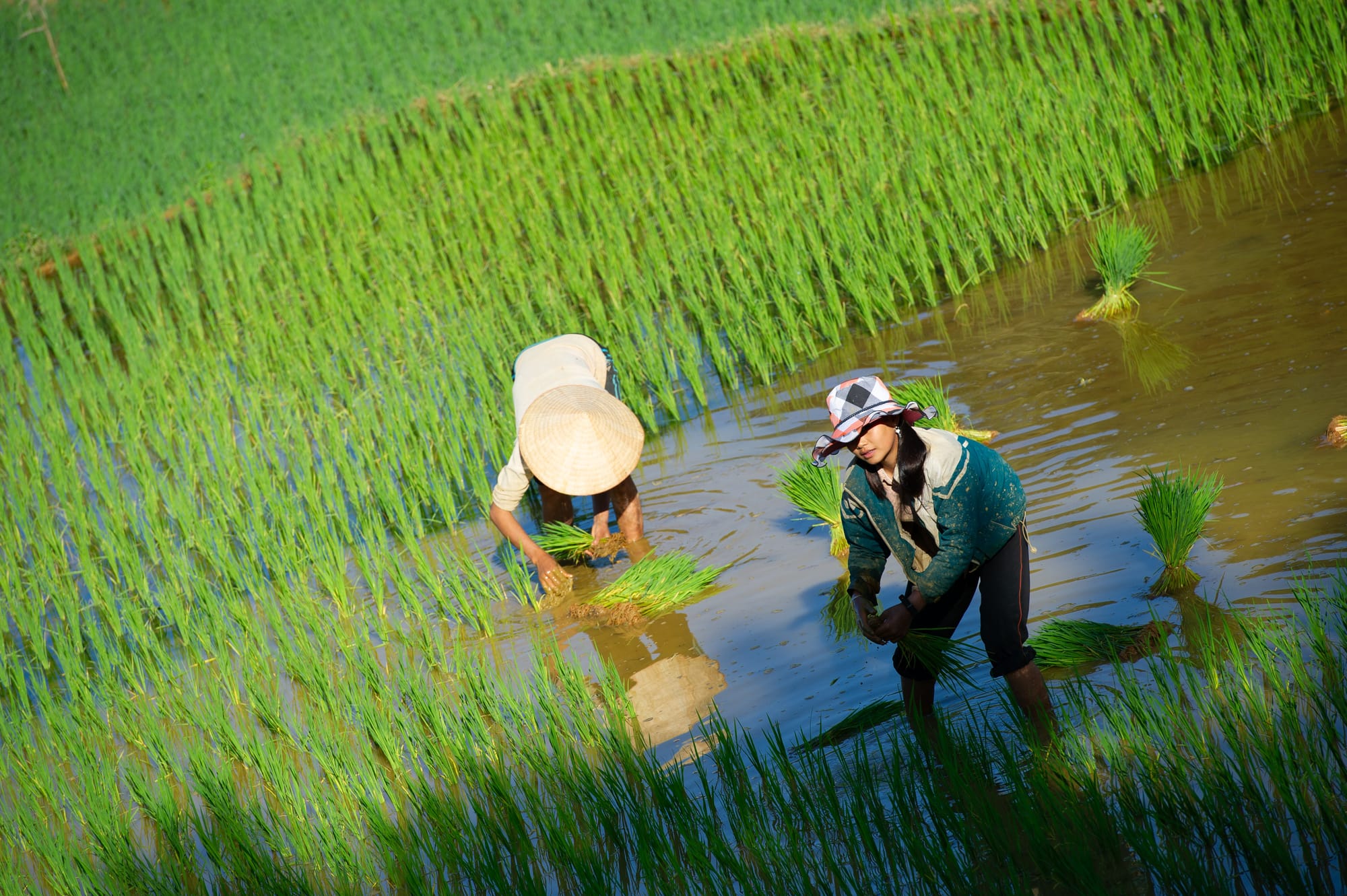
Occasionally someone stopped and looked towards me as I stood at the edge of the field with my camera and lens. Documentary style.
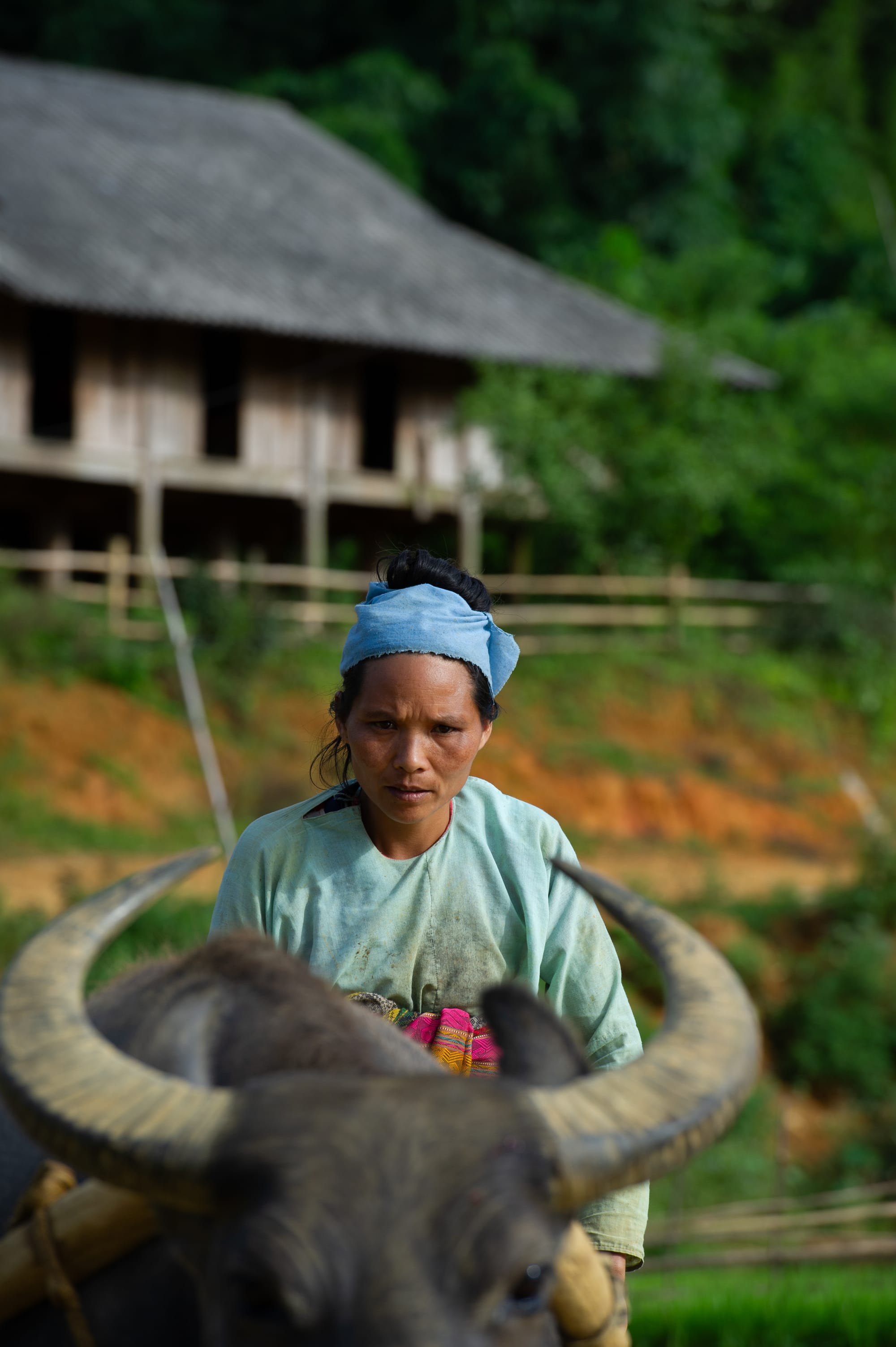
Then, after the momentary pause their toils continued.
The landscape built.
Seen from above, the rice terraces of Son Village could easily be mistaken for a natural feature of the valley.
They were not.
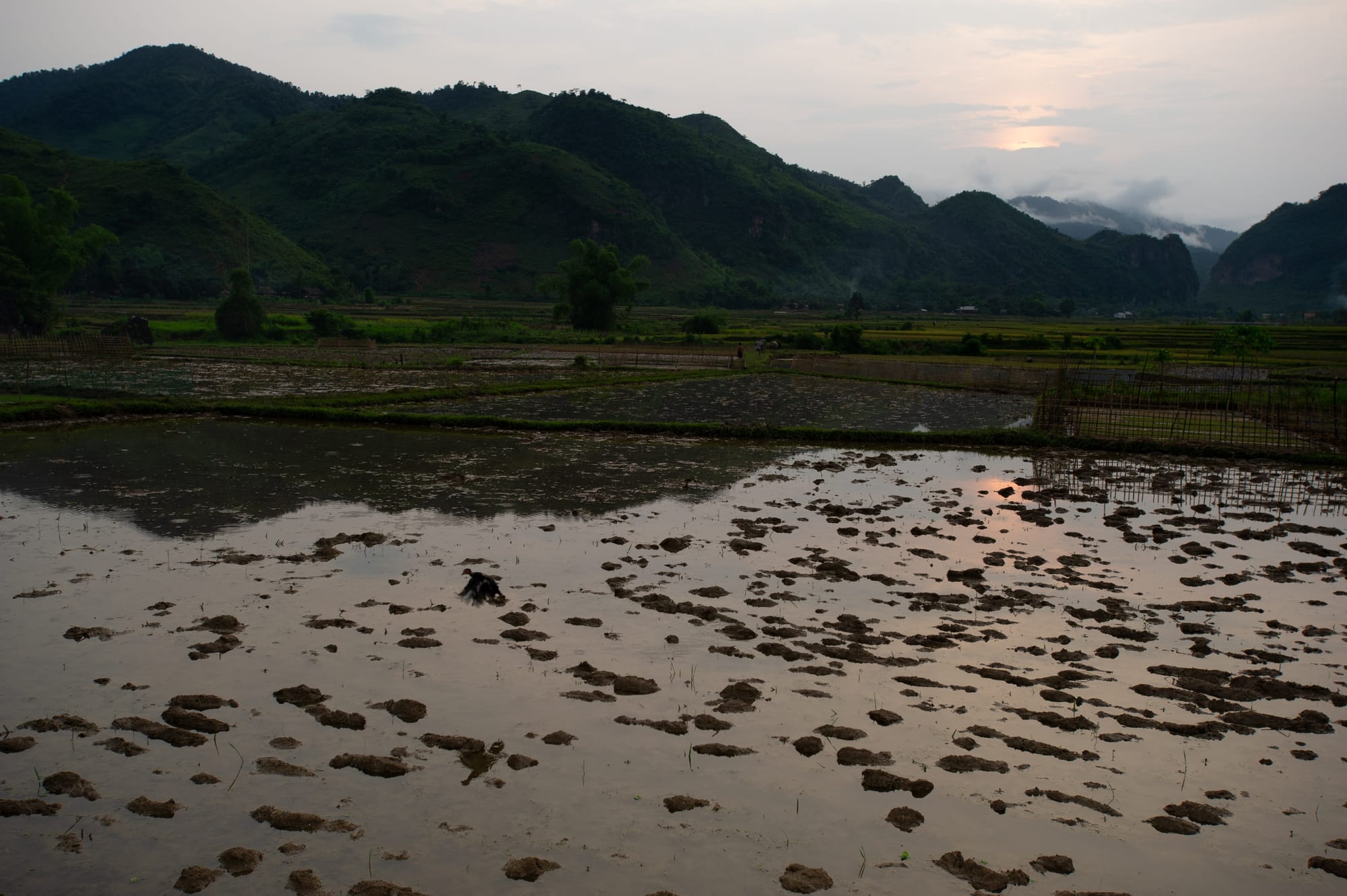
Every small field had been created.
Every clod-den bank had been built and maintained.
Water had to be conserved, controlled to fill one plot then another. Banks damaged by animals, rain or simply the passage of people had to be repaired. Paths existed to the workplace, and back to houses.
The dense rainforest forest certainly defined the limits of Son Village, but within those boundaries almost everything visible had been shaped by human labour.
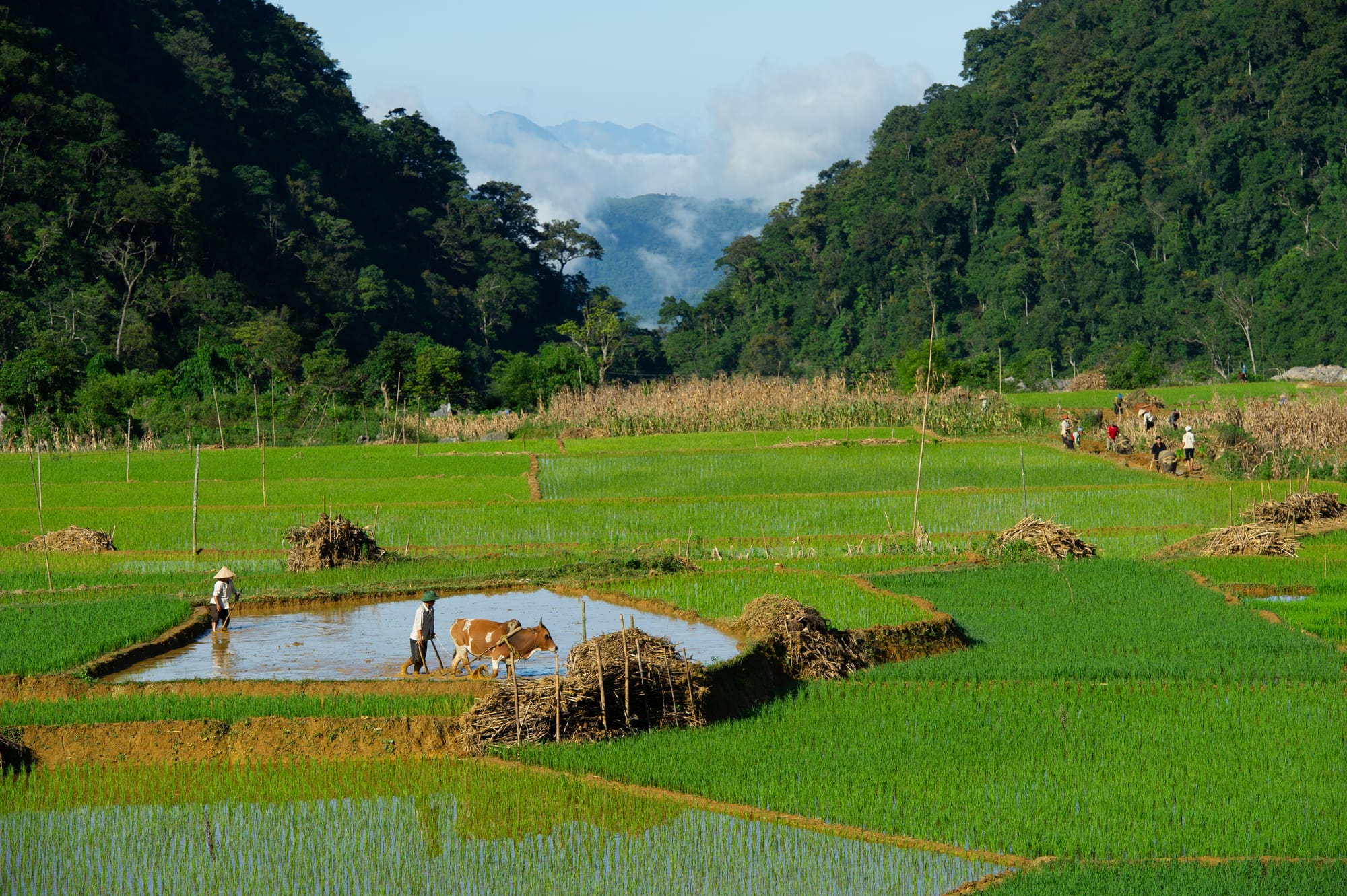
It was something that I had failed to understand when I first emerged from the jungle and looked across the valley.
I had thought I was looking at a beautiful agricultural landscape created by generations of inhabitants of the Son community.
At the closing of the working day.
Later, in the early evening, people gradually began returning towards the houses.
Buffalo were led back along the narrow paths. Tools were carried over shoulders.
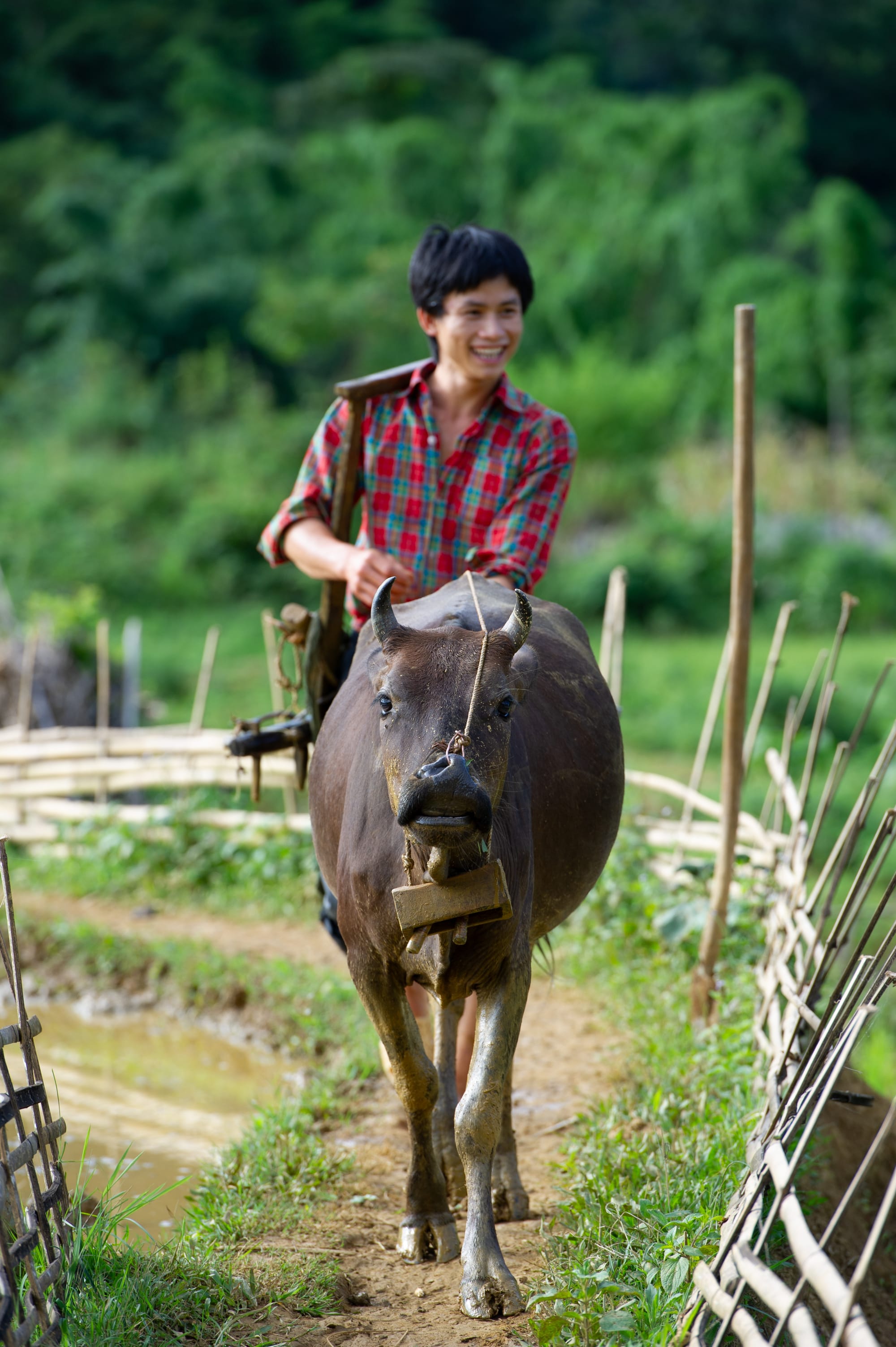
The paddies became peaceful in the stillness quiet as frog started to call for order.
Tomorrow, the farmers would again be scattered across them.
The planting season continued naturally on the following day, and the day after that.
Timeless.
(c) Stephen Ford.