Son Village Chapter 2.

The Elder.
A little into my stay in Son village I realised there was one person I had not seen working.
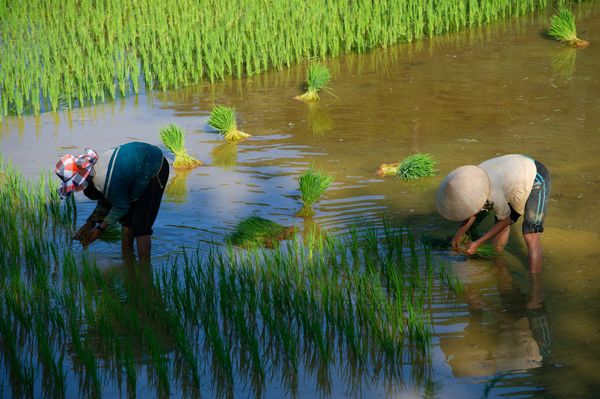
Throughout the valley people were already busy. Buffalo moved slowly through flooded rice fields, children carried small bundles between the fields and adults disappeared into the surrounding forest in search of timber, kindling and firewood. The rhythm of the village seemed entirely governed by work.
Yet one house remained occupied throughout the day.
Beneath a timber stilt house, sitting quietly in the shade while the rest of the village worked, was an elderly man watching over his young grandchildren.
It was here that I first met the village elder.
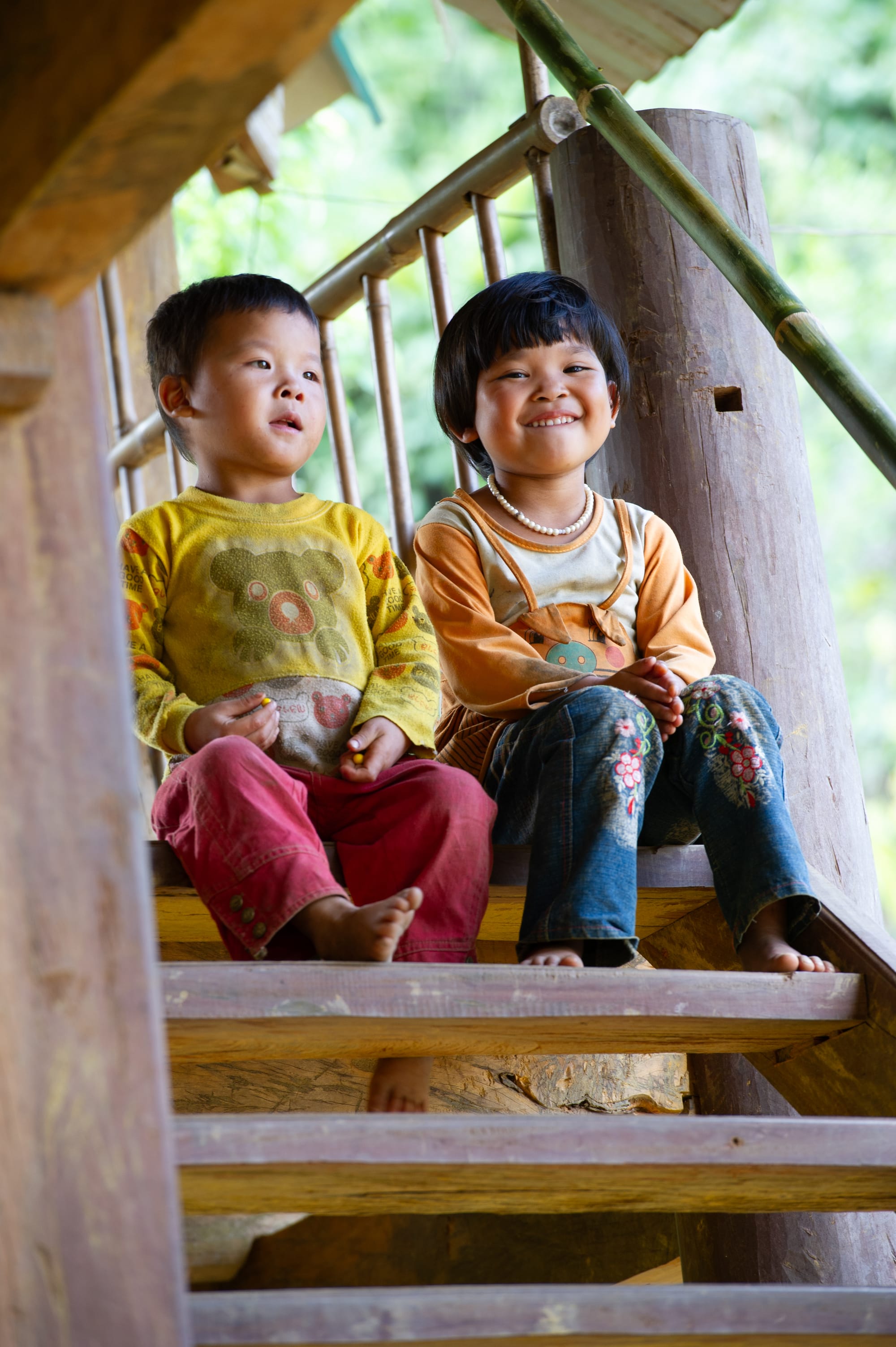
The children accepted my presence far more quickly than the adults.
Like children almost everywhere, curiosity soon replaced caution. They climbed the wooden stairs, watched quietly from behind bamboo handrails and gradually edged closer to see who the stranger with the camera might be.
There was no need to ask them to smile or to pose. Before long they simply returned to playing, occasionally glancing towards me before becoming absorbed once more in their own small world.
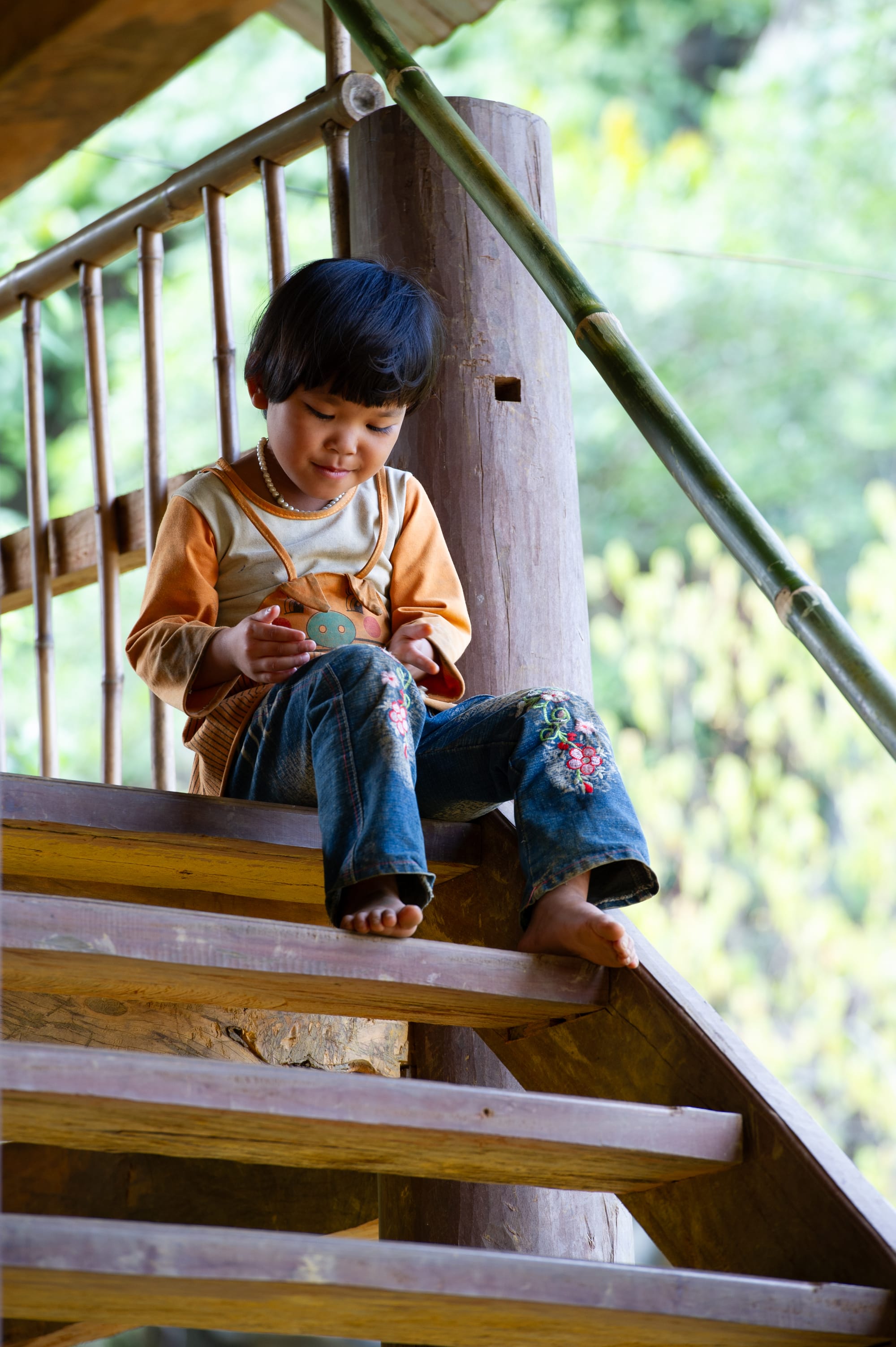
While their parents worked in the rice fields beyond the village, a few remained with their grandfather.
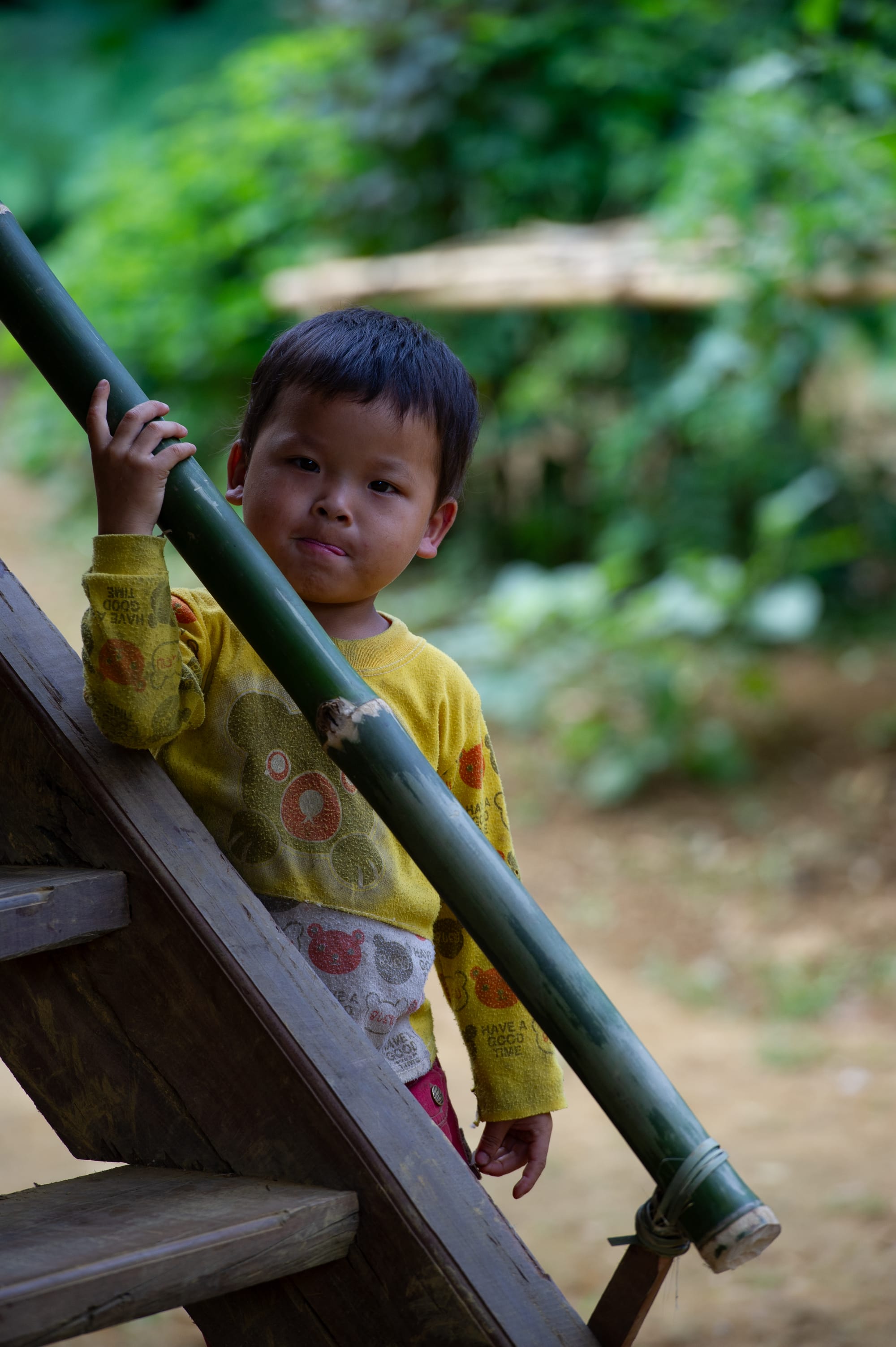
It seemed the most natural arrangement imaginable.
The older generation cared for the youngest while the middle generation worked.
No one appeared to question it.
Their grandfather rarely spoke unless spoken to.
He watched everything.
Occasionally he smiled at the children or quietly answered a question before returning to silence. There was a calmness about him that seemed entirely in keeping with the village itself.
He no longer worked in the fields.
His contribution now was different.
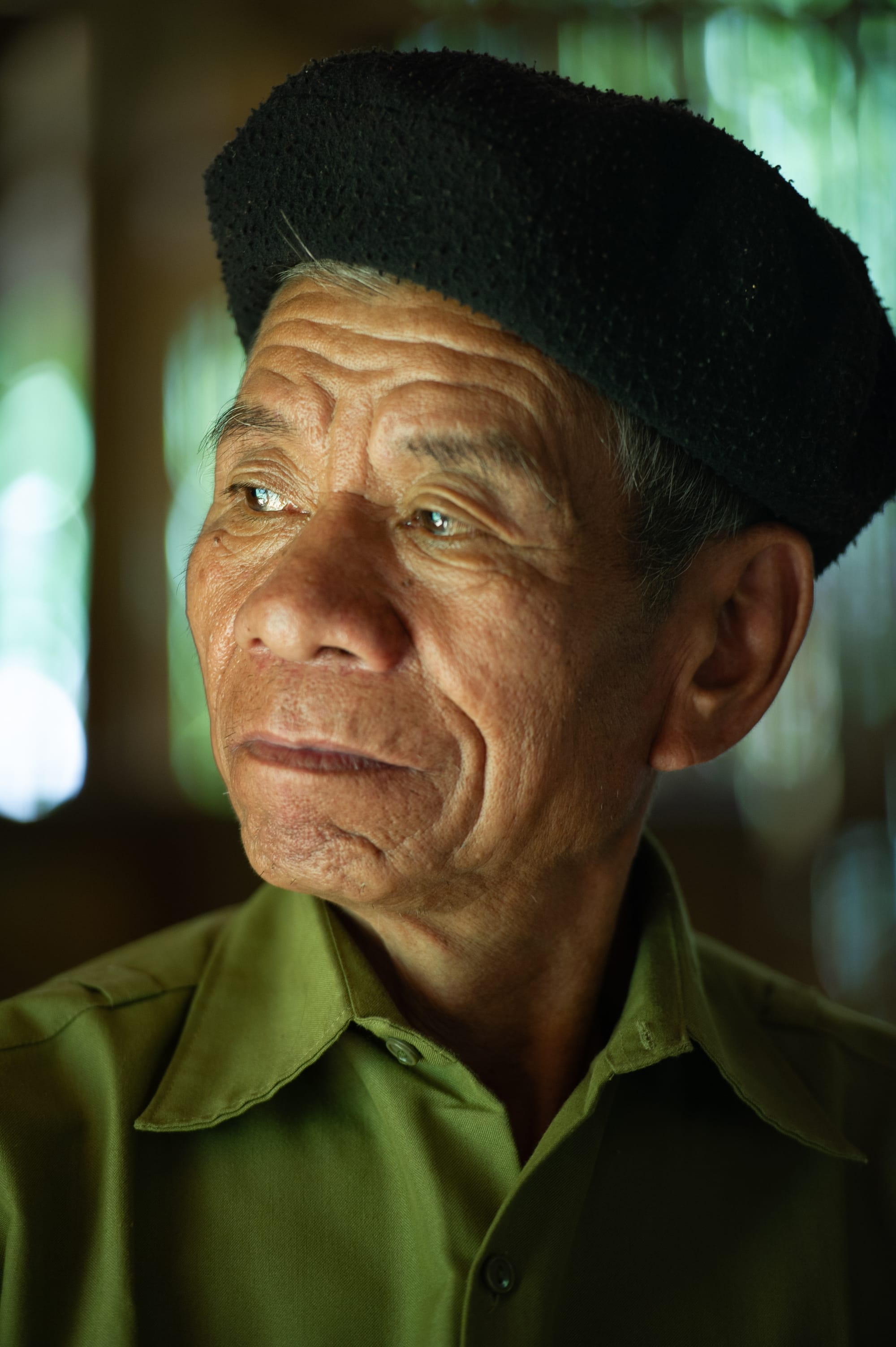
As we sat together inside the timber house, light drifted through the gaps in the wooden walls. Conversation - mostly gestures - came slowly, interrupted by long silences that never felt uncomfortable.
Sometimes observation is more valuable than questioning.
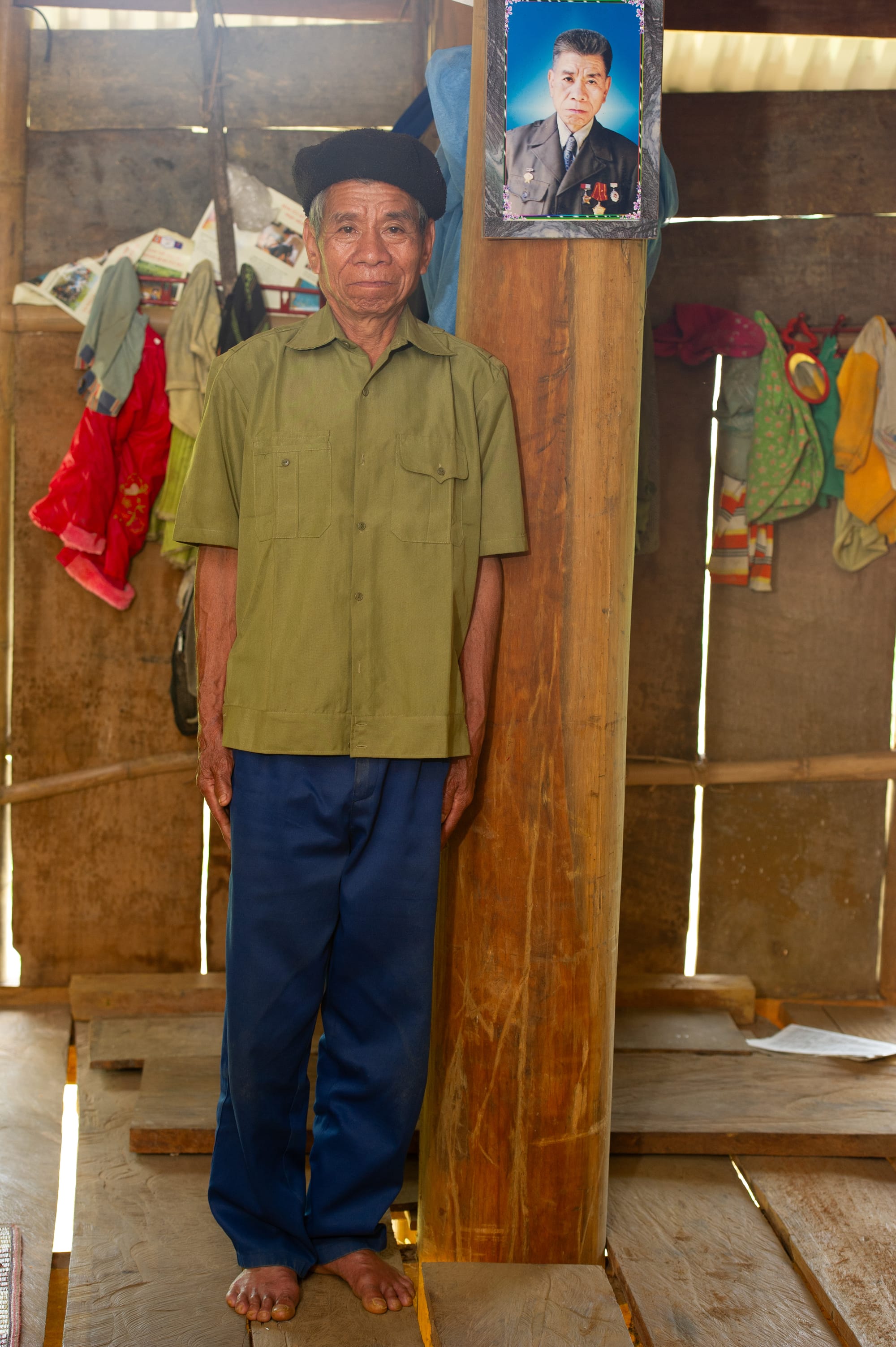
Only after spending some time with him did I notice the framed portrait hanging beside one of the timber posts.
It showed the same man many years earlier, dressed formally and wearing military decorations.
The photograph revealed a life that had existed long before I arrived.
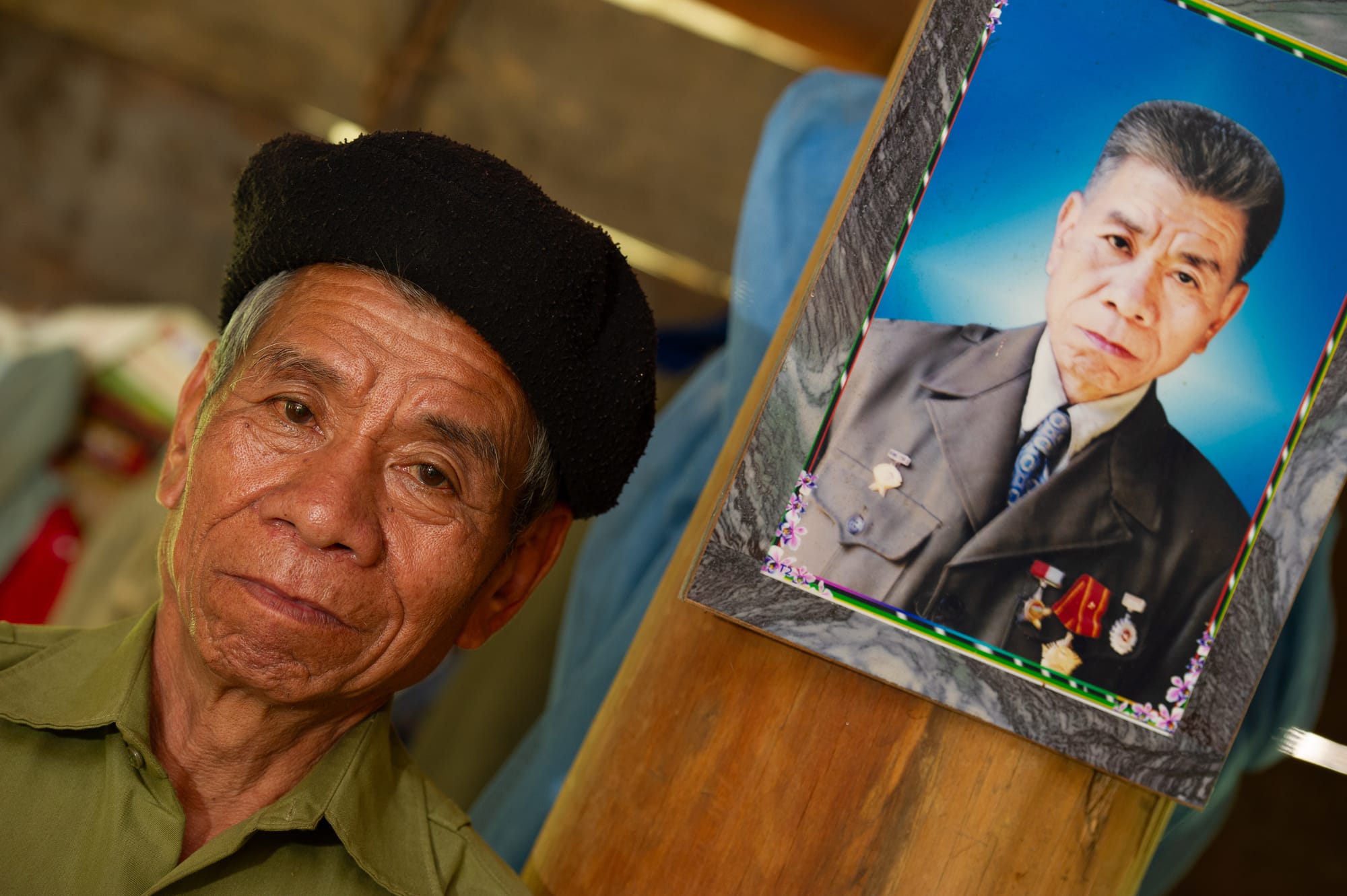
He had served during the Vietnam War.
His brother was killed in the same war.
Exactly where he fought, and in what capacity, mattered less to me than what he had become afterwards.
Here, in Son Village, he was no longer a soldier.
He was a grandfather.
A neighbour.
The village elder.
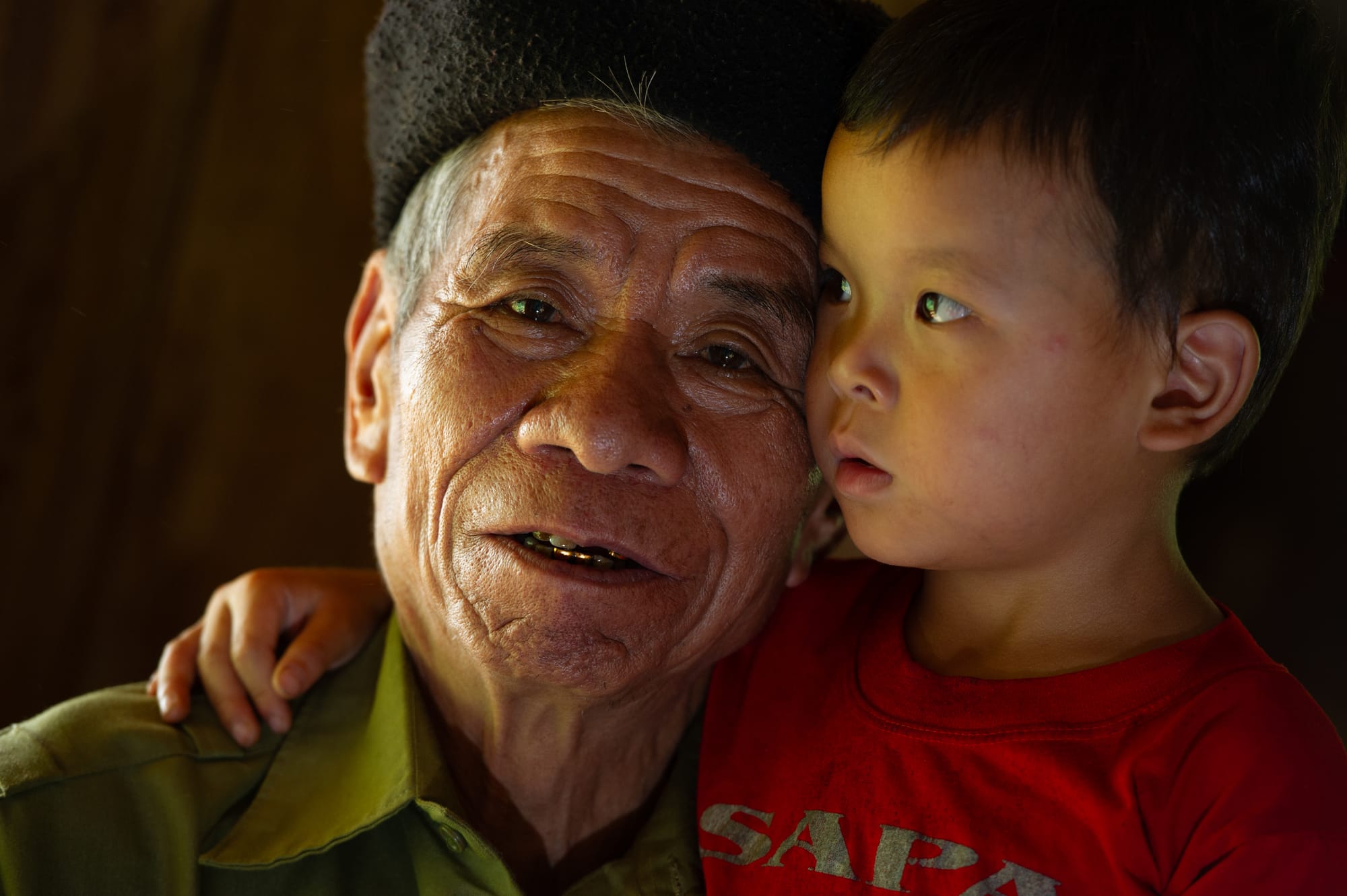
As the children wandered in and out of the house, one small boy eventually climbed into his grandfather's lap.
The old man scarcely reacted.
The movement seemed entirely familiar, repeated countless times before.
One generation rested comfortably against another.
Outside, the village continued planting rice.
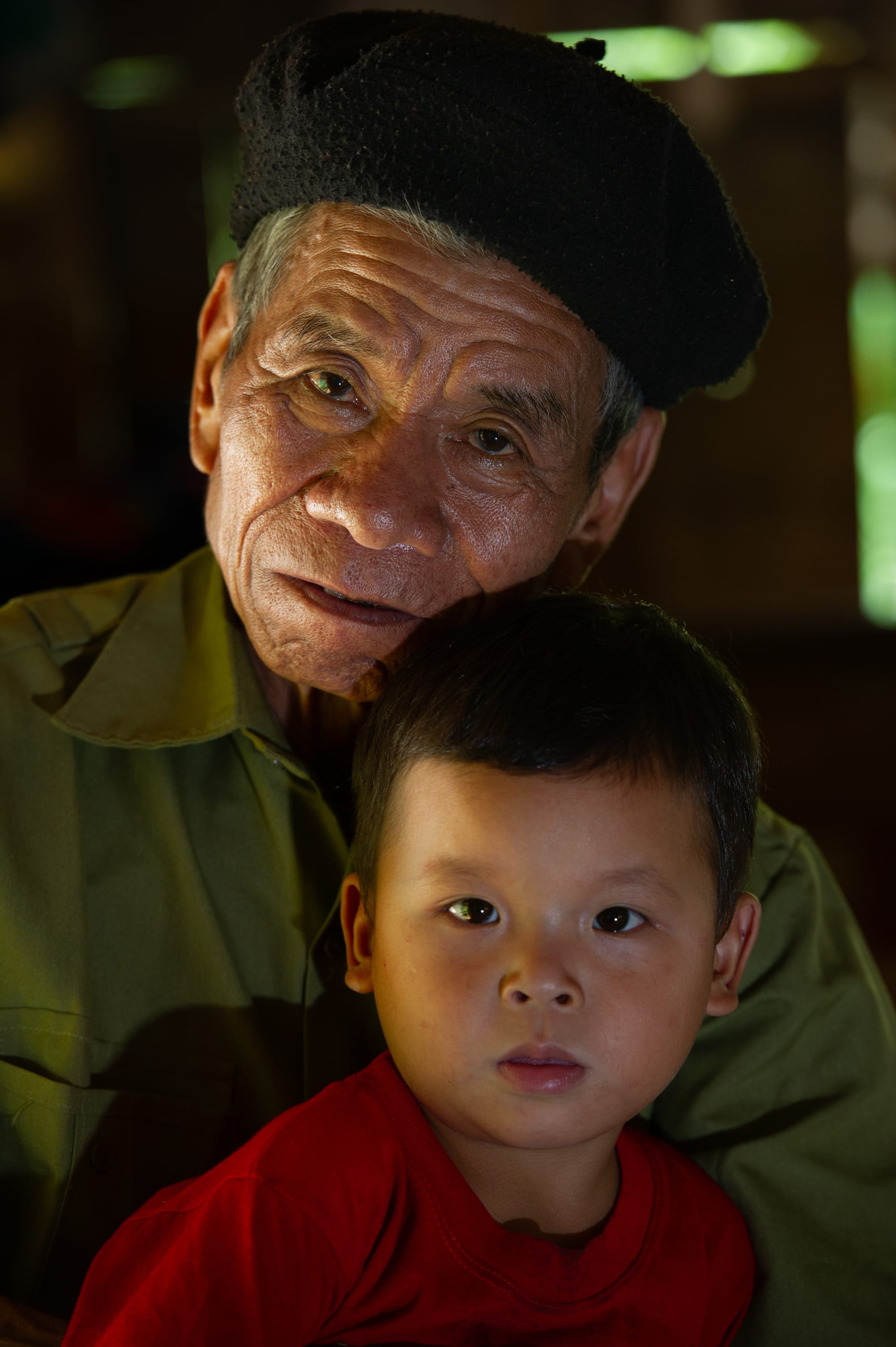
The years between them were impossible to ignore.
One face carried the marks of age, responsibility and memory.
The other looked only towards whatever movement or sound had briefly caught his attention.
Neither appeared aware that together they represented the continuity of the village itself.
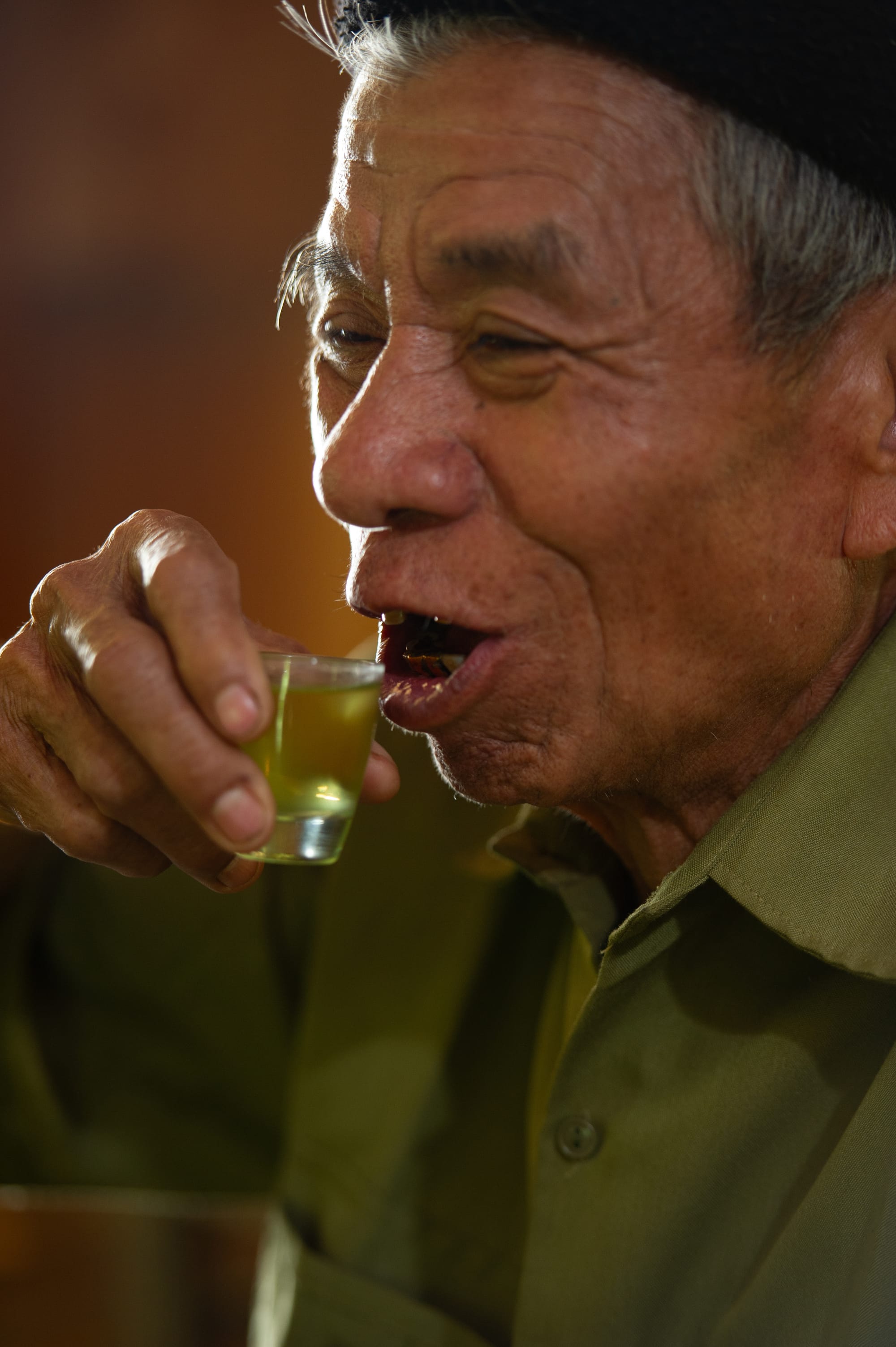
Before I left, he poured a small glass of rice wine for us both.
We enjoyed a little more levity.
He smiled often, revealing gold teeth that caught the afternoon light, but conversation never became lengthy, he spoke no English, I spoke no Vietnamese.
Not every meeting requires many words.
Some people are understood simply by spending time in their company.
As I walked back towards the rice fields, the sounds of work gradually returned.
The elder remained where I had first found him, watching over the youngest members of the community while the rest of Son Village carried on with the work that had sustained it for generations.
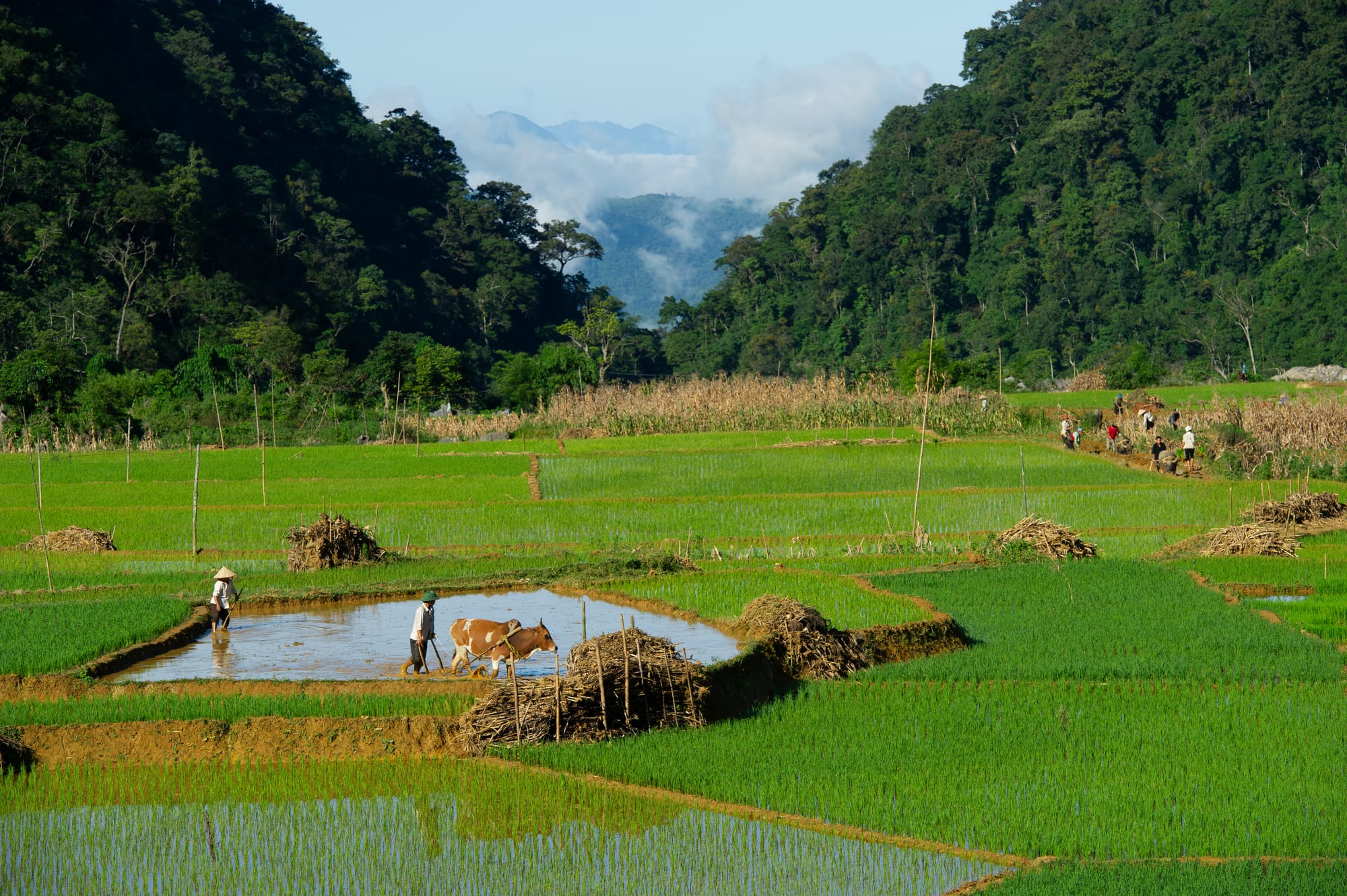
In the following chapter we leave the shade of the stilt houses and return to the rice fields, where almost every family in Son Village is preparing the second rice crop of the year.
(c) Stephen Ford. We analyse and observe. Nothing more.