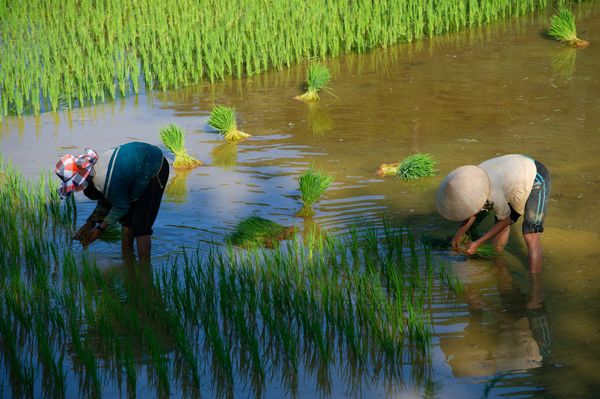
Son Village, North-West Vietnam, July 2011.
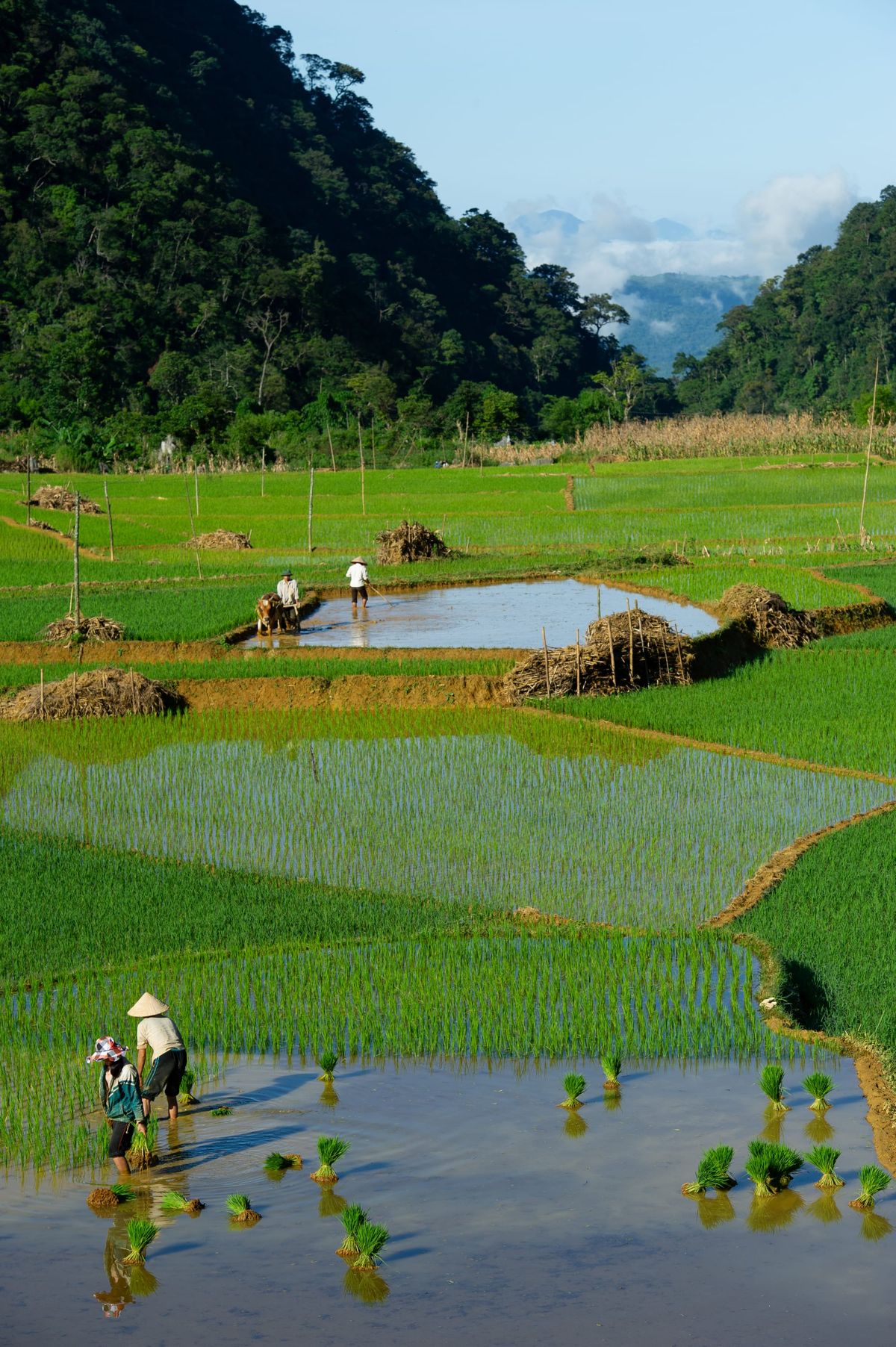
Observations from a mountain farming community.
Chapter 1 - The Journey.
In the summer of 2011 I spent several days in Son Village, a small farming community hidden deep in the mountains of north-west Vietnam. Rice planting—the second crop of the year—was underway. Across the small valley bowl families worked from dawn, preparing seedbeds, lifting young plants, guiding buffalo through flooded paddies and transplanting rice by hand. Nothing appeared hurried. Every task depended upon the one before it, and every field seemed to reflect generations of accumulated agricultural knowledge.
The first impression of Son Village is not the village itself.
It is the journey.
The climb begins on the valley floor many hundreds of metres below. The narrow path rises relentlessly across steep limestone slopes, often little more than slippery mud winding between exposed rock and dense tropical forest. Even for those who make the journey regularly it takes several hours.
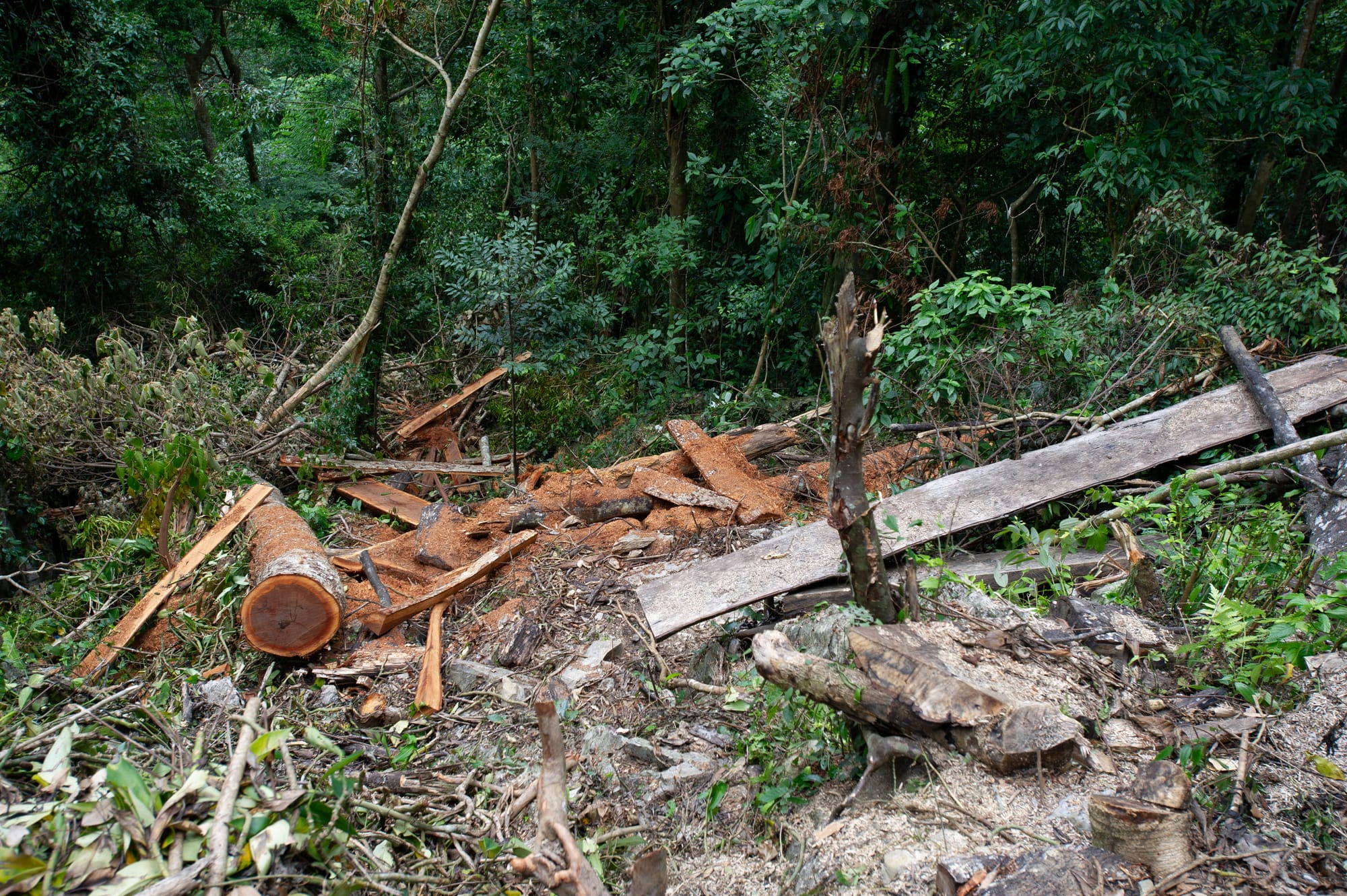
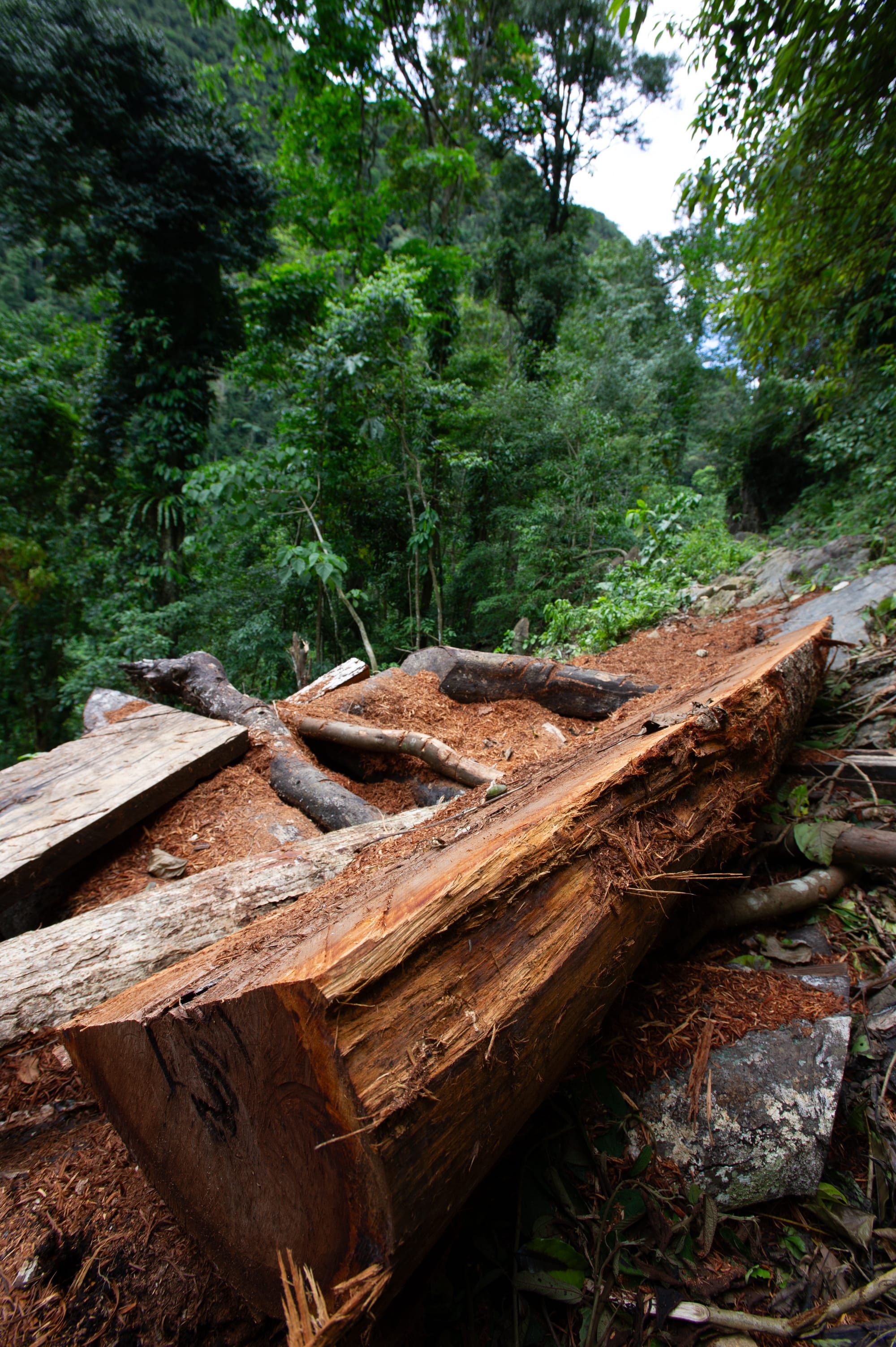
Long before reaching Son Village the path itself begins to explain how the community survives. Freshly felled hardwood lies beside the trail, cut into beams with hand saws. Every house, every rice terrace and every cooking fire depends upon materials carried from the surrounding forest. Even the journey to the village is a reminder that life here is built through labour.
Only then does Son Village reveal itself.
The route twists back on itself countless times before finally emerging from the trees a mountain valley. To me, it felt like a natural bowl enclosed by forest, almost entirely hidden from the world below.
The village itself sits quietly amongst rice terraces that appear to have been shaped by countless generations. Small plots, perhaps no more than two or three hundred square metres each, are divided by carefully built earthen banks. Grass binds the mud together while the low walls retain the shallow water essential for growing rice. Walking along these narrow paths requires as much concentration as appreciation; a misplaced step means disappearing ankle-deep into the paddy. Only one rocky arterial track seemed to have been widened at that time - perhaps for those with motorcycles who wanted to quickly access their plots? - the rest were narrow traverses between rice fields.
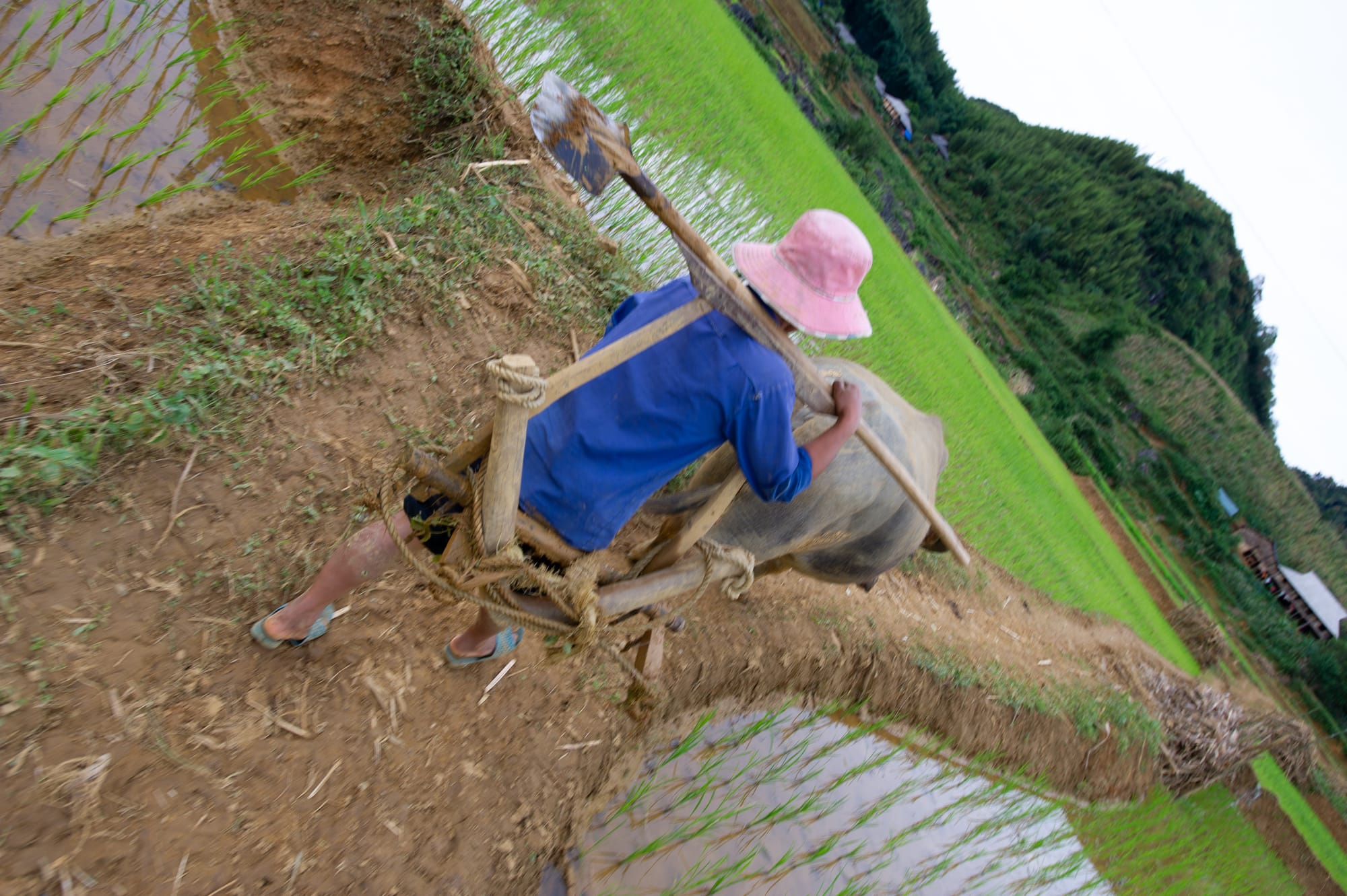
The village and its agriculture seem inseparable. One exists because of the other.
It soon becomes clear that farming here is not simply an occupation. It is the structure around which the entire community is organised.
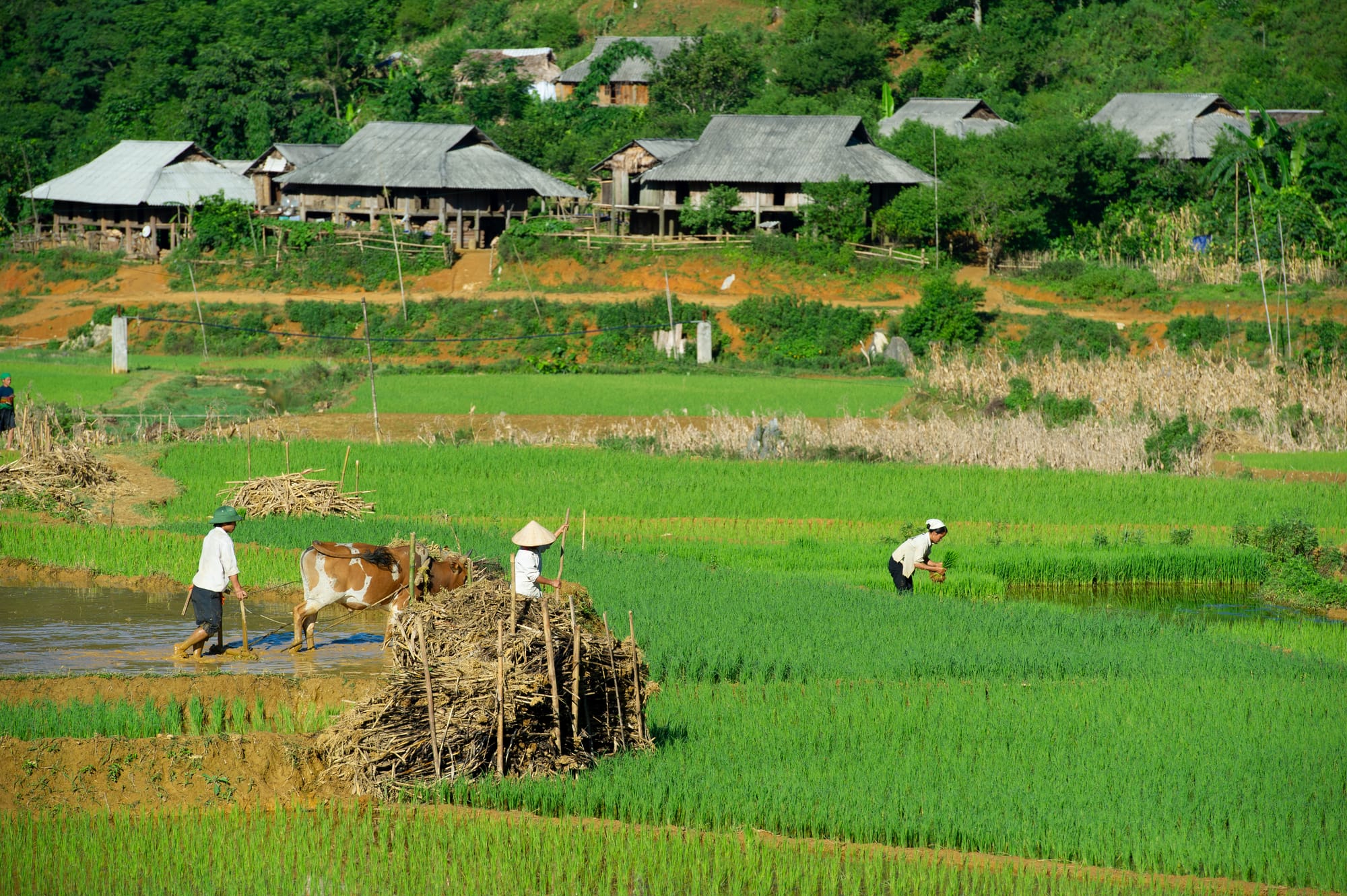
Timber stilt houses stand quietly amongst the smaller trees, but few people remain at home. Almost everyone is working somewhere beyond the houses. Some guide buffalo through flooded paddies. Others transplant rice or prepare seedling beds. Elsewhere people disappear into the surrounding forest to gather firewood, timber or other essentials that the jungle continues to provide. Some make the long journey into the village on the valley floor, and thus during the day the homes felt strangely empty.
There was one exception.
An elderly man, the recognised head of the village and a veteran of an earlier generation, remained at home with his young grandson and granddaughter while the rest of the family worked in the fields.
I spent time with him later in the week.
His story deserves a chapter of its own.
(c) Stephen Ford 2026. We analyse and observe. Nothing more.